ArrowSpace: Spectral Indexing of Embeddings using taumode (λτ)
DOI:

- Introduces ArrowSpace: spectral vector search blending semantic similarity with graph Laplacian energies via the synthetic λτ (taumode) index.
- Establishes λτ as a computationally cheap proxy for structural deviation — operationally useful for active learning, RAG tails, and OOD detection.
- Sets the invariant that the manifold is built in feature space rather than item space.
Code: arrowspace (Rust) · CVE benchmark
The Next Evolution in AI Memory: Energy-Informed Vector Search founding post
Fast (not approximate?) Nearest Neighbours v0.16.0 — fastest open ANN
DeepSeek-OCR + Energy Search in ArrowSpace v0.18.0 NDCG@10 ≈ 0.99 · MRR=1.0
Safer LLMs require open search — Building the AI Memory Layer AI safety
Graph Wiring: Eigenstructures for Vector Datasets and LLM Operations
DOI:

- Generalises ArrowSpace into a graph wiring framework; builds discrete graphs from arbitrary vector spaces by transposing data into feature space.
- Feature-space Laplacian behaves as a discrete Laplace–Beltrami operator; minimising Rayleigh quotient ≡ constructing a discrete minimal surface in feature space.
- Provides the theoretical foundation tying together λ-indices, epiplexity, and MRR-Top0 into a unified manifold-based view.
Code: arrowspace · surfface
MRR-Top0: A Topology-Aware Extension of Mean Reciprocal Rank
DOI:

- Extends MRR with topology-aware score using PPR, conductance, and modularity — evaluates full top-k list, not just the first relevant hit.
- Quantitative lens on "tails quality" critical for long-term multi-query RAG stability.
- Establishes Topological PageRank as a central metric for spectral manifold assessment.
arrowspace hits the spot for semantic augmented retrieval
geometry-only cosine fails at tail
Epiplexity And Graph Wiring: An Empirical Study for the Design of a Generic Algorithm
DOI:

- Connects ArrowSpace λ scores to epiplexity; treats λ as proxy for manifold deviation.
- Studies epiplexity-weighted retrieval tail behaviour and OOD items using CVE benchmarks.
- Empirically tests a generic algorithm combining λ, epiplexity, and topological quality for spectral search.
pip install epiplexity
🎙️ arrowspace: Vector Spaces and Graph Wiring — MLOps Community Podcast
- How Graph Wiring reframes vector datasets as feature-space manifolds.
- Why epiplexity matters for retrieval, curation, and model operations.
- What is structural information and how to generate information from datasets.
Spectral-aware Unique Identifiers for Generative Retrieval and Vector Search
DOI:

- Introduces spectral-aware IDs: composite codes pairing integer ID with an order key derived from taumode, aligning identifiers with the spectral manifold.
- Improves manifold consistency vs conventional generative retrieval identifiers; compatible with standard vector DBs and RAG pipelines.
- Bridge between ArrowSpace-style spectral indexing and modern generative retrieval.
🏆 Submitted to NeurIPS 2026
arrowspace for Latent Spaces — part 2
36 weight-role subspaces probed
From Embedding Geometry to Spectral Search: Energy Dispersion Networks For Vector Retrieval
- Introduces Graph Wiring: a general framework for exploiting feature-space spectral structure in vector search, together with its task-specific instantiation Spectral Indexing.
- Couples geometric similarity with spectral information to improve head-tail coherence and semantic alignment relative to purely geometric retrieval.
- Supports adaptive search via tau-modulation for modern RAG pipelines; establishes theoretical foundation through epiplexity.
- Evaluated across benchmark and industrial settings using the open-source
arrowspacelibrary.
⏳ Next? Become a sponsor to be part of this endeavour
📊 Blog Figures Gallery
All benchmark charts from published posts. Click any figure to expand.
Post 016 · arrowspace: Capabilities, speed and accuracy · CVE benchmark


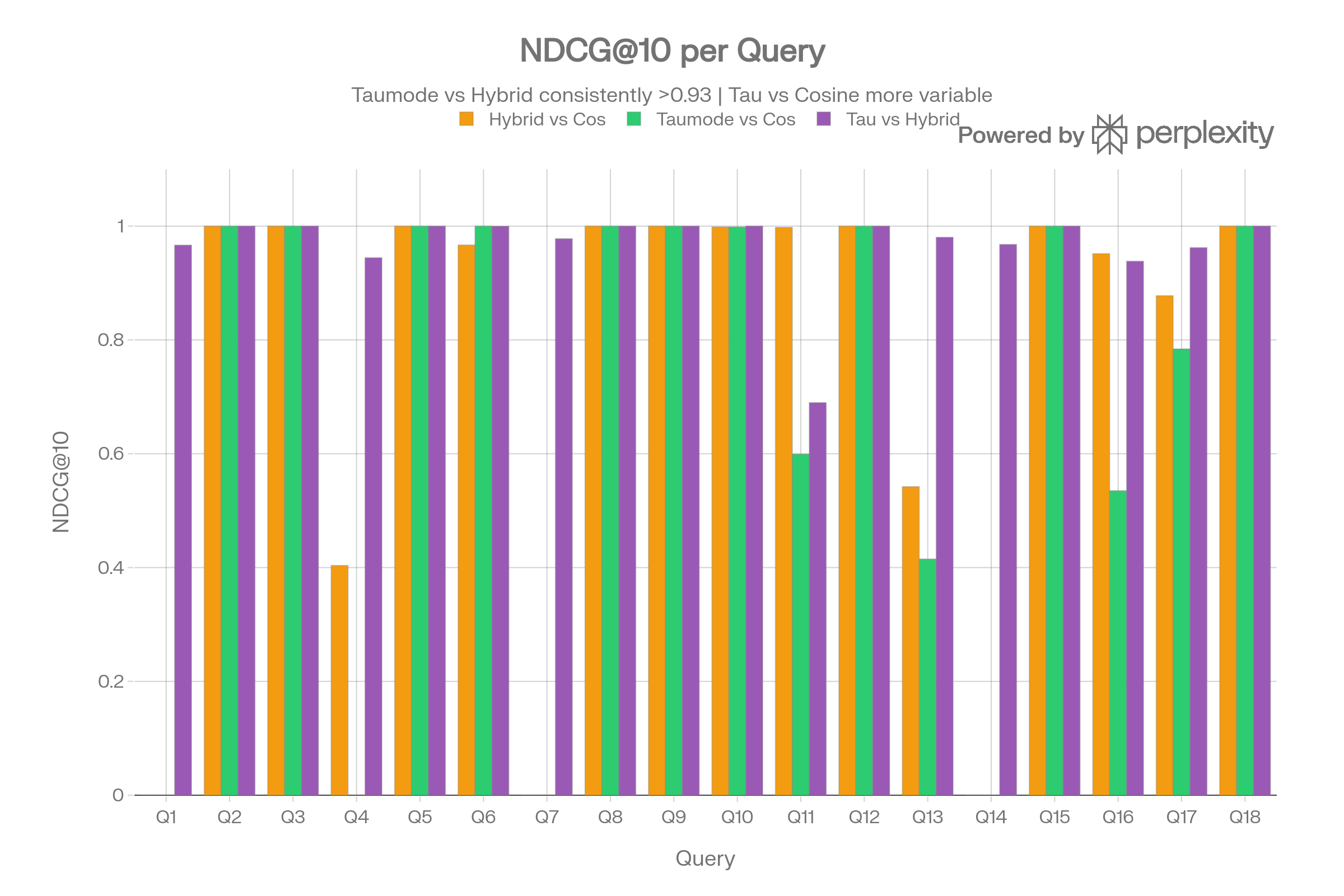

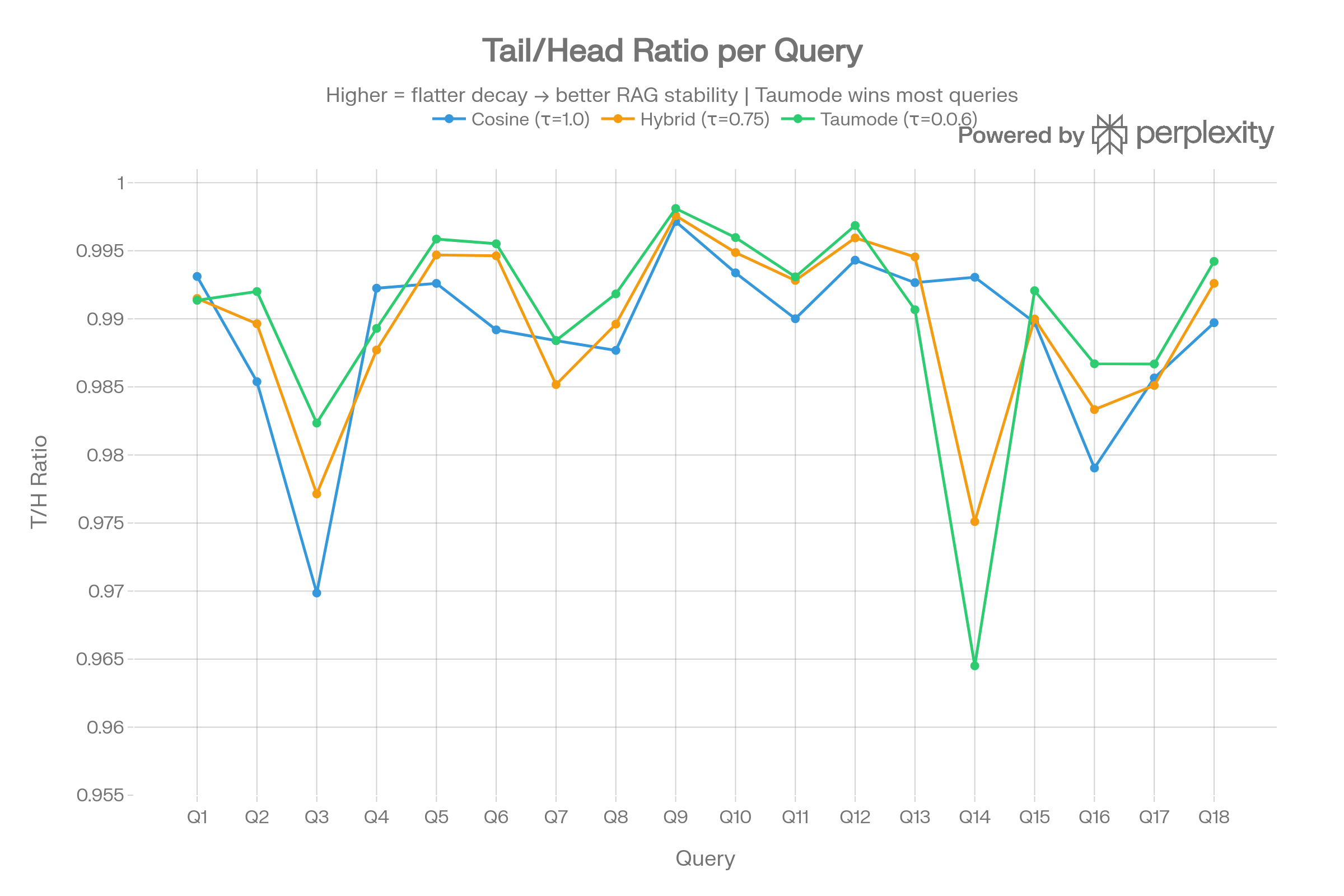
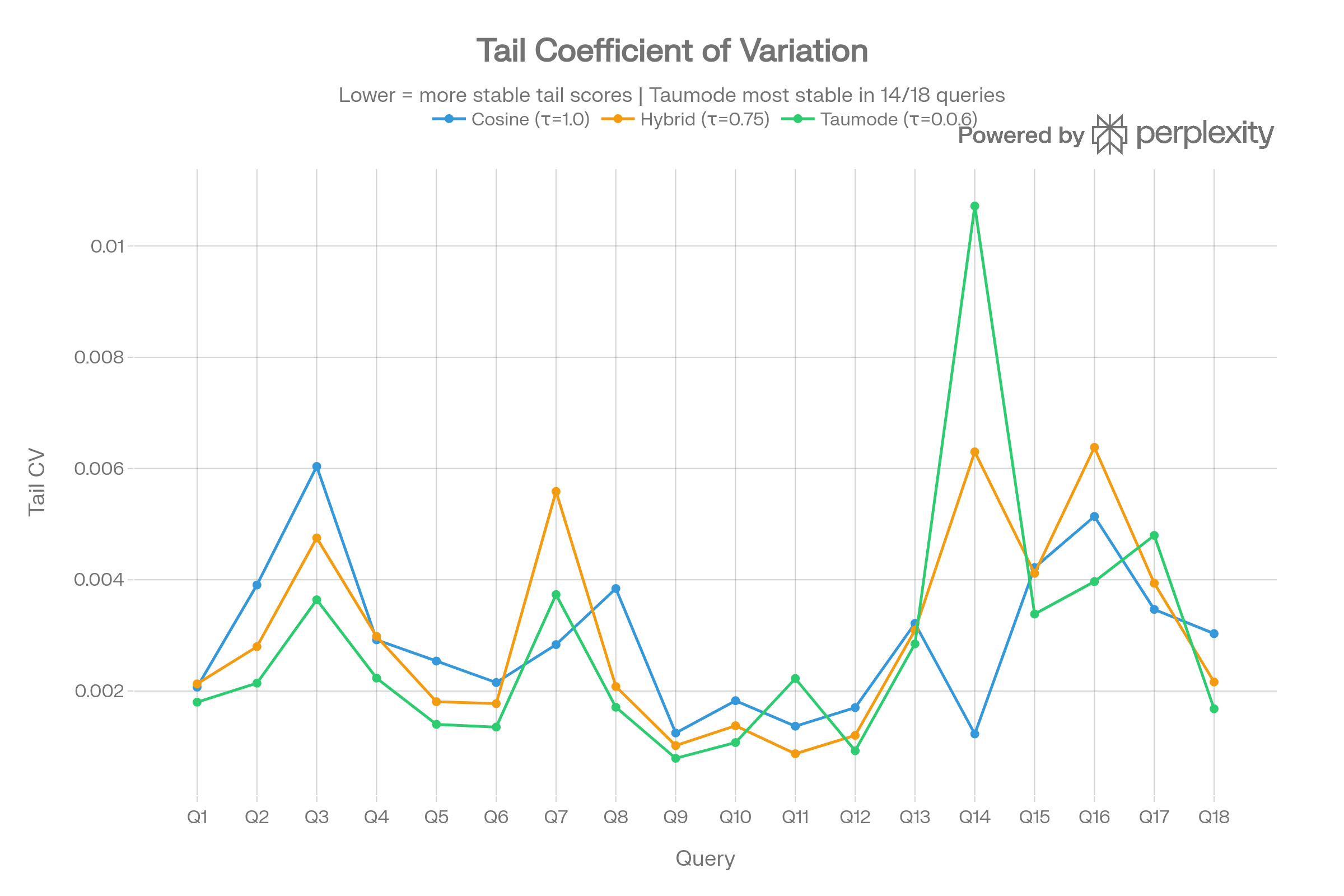
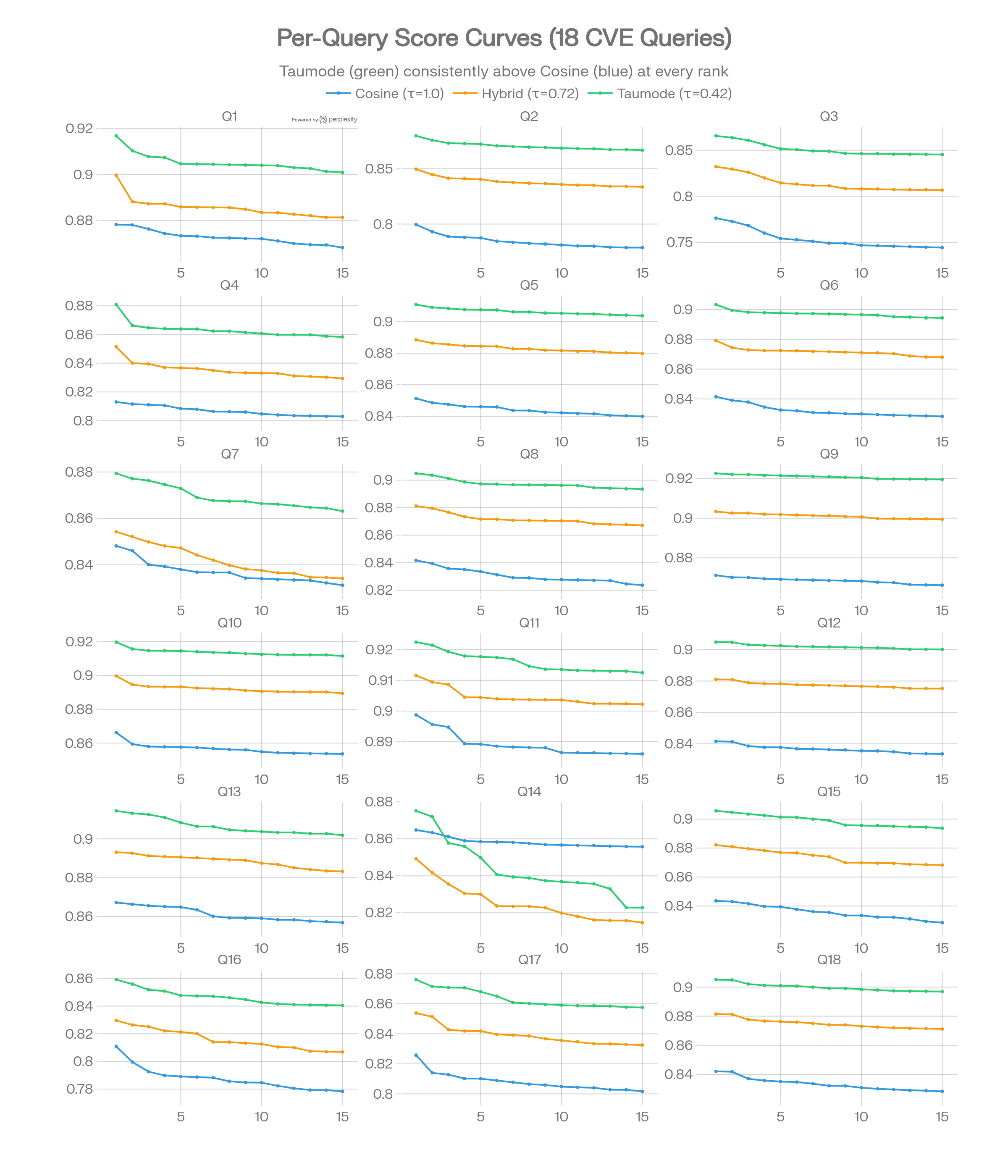
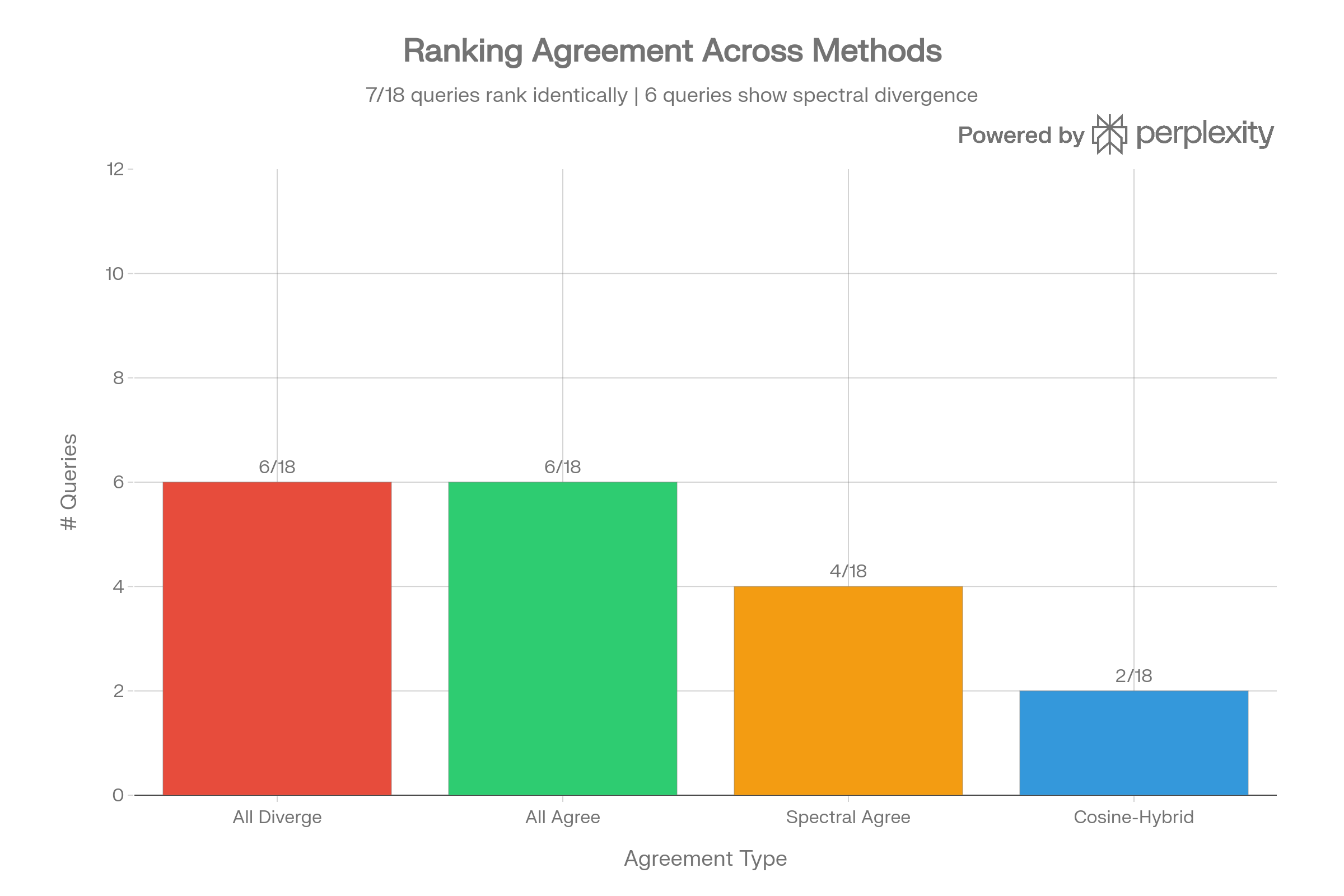
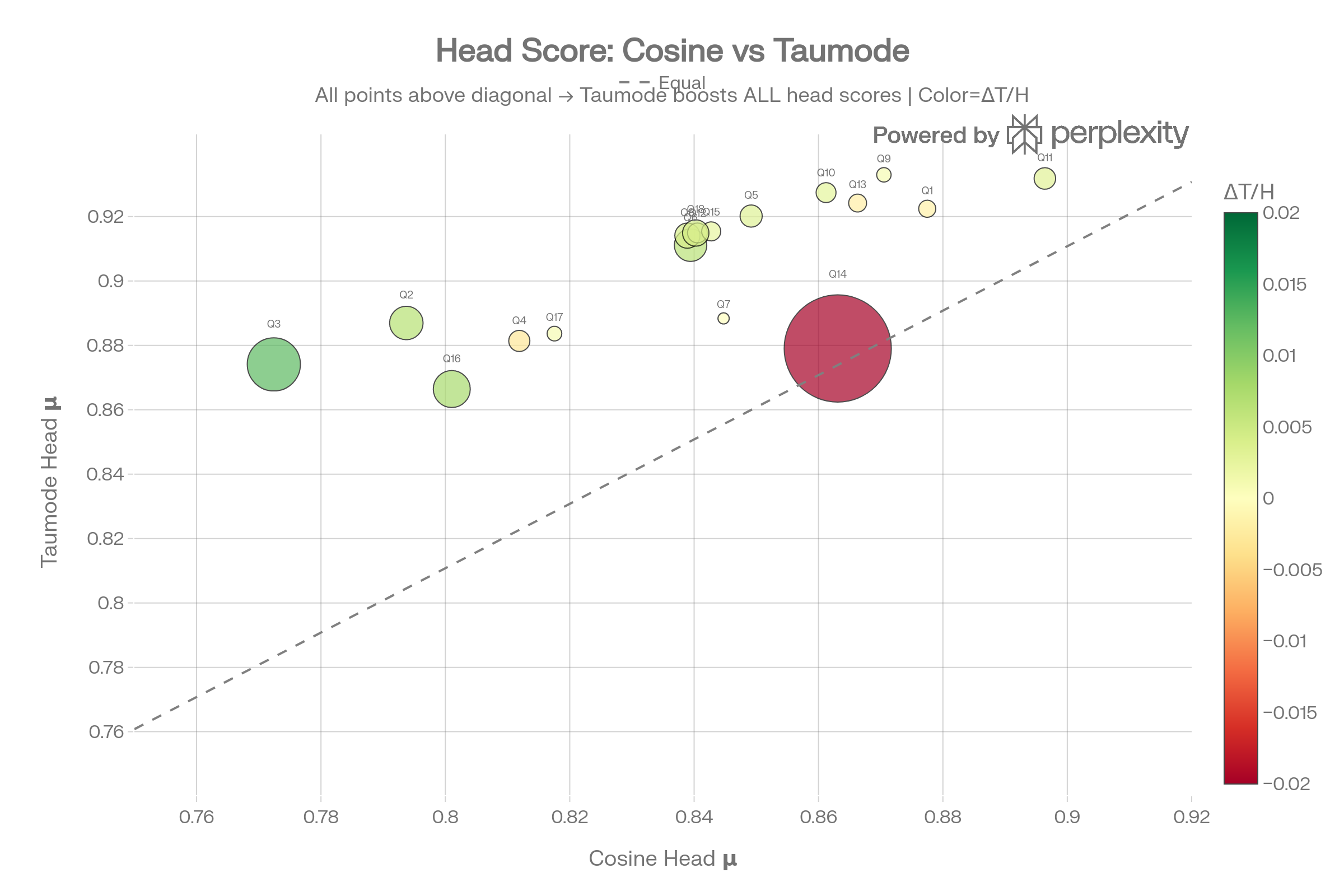
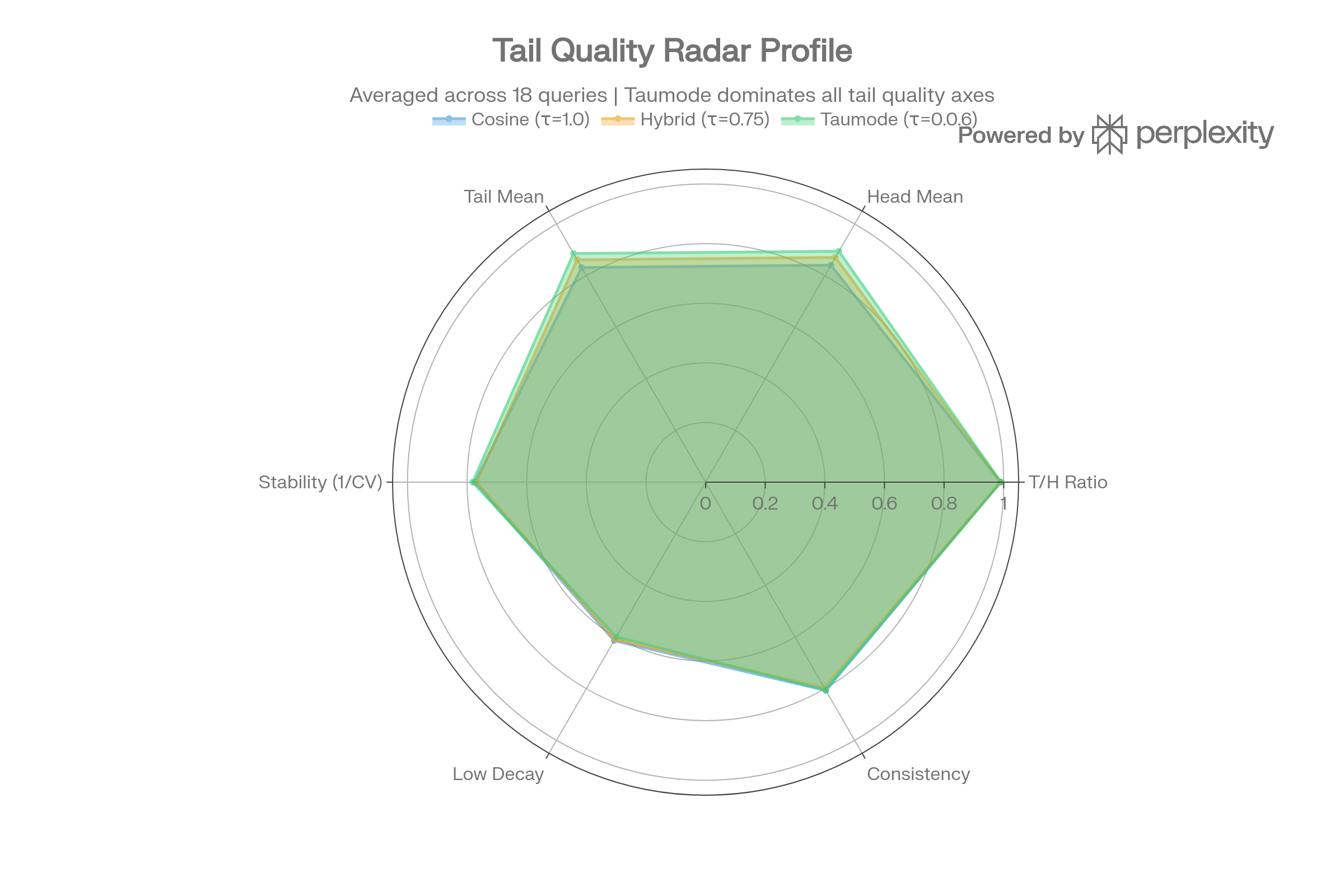
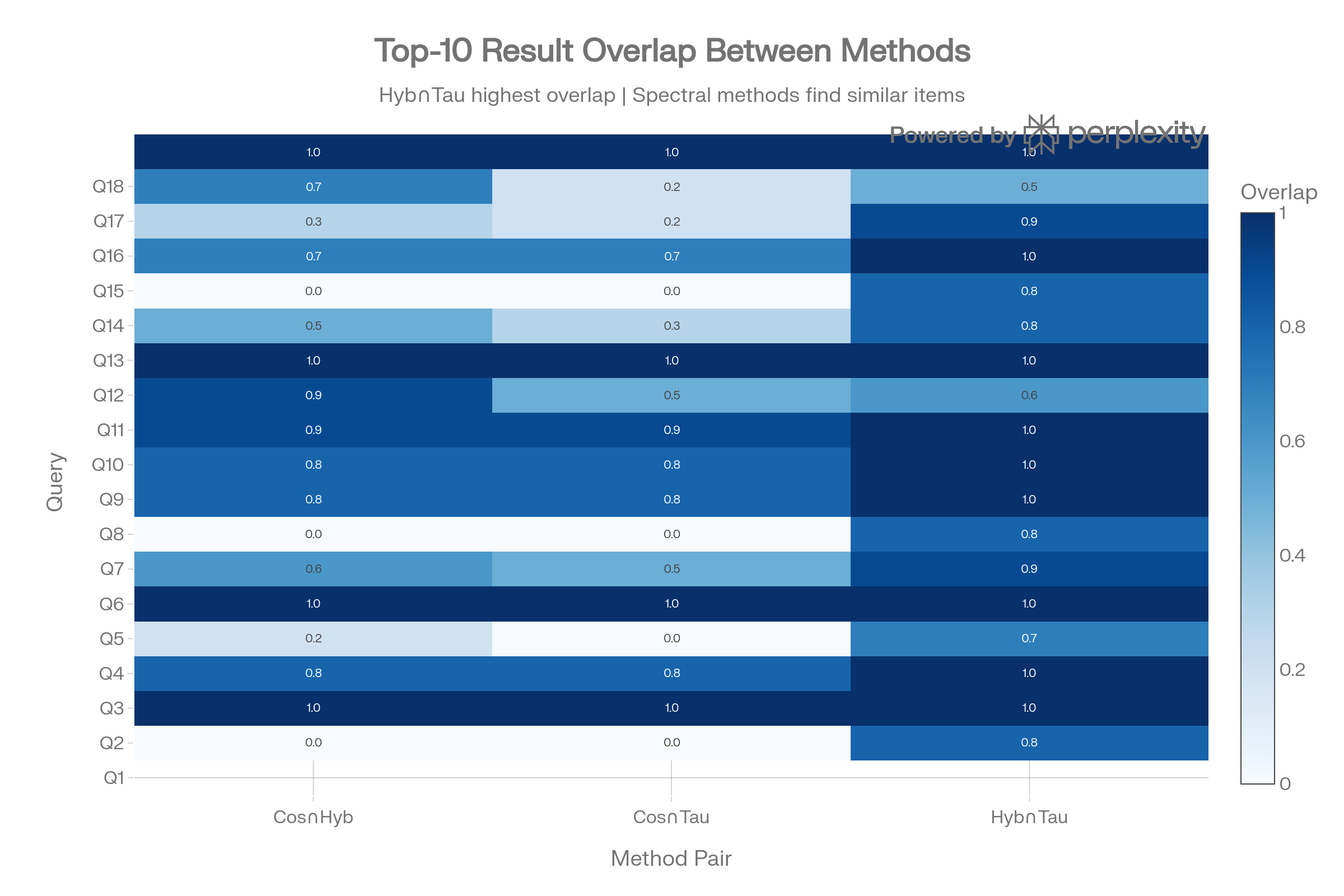
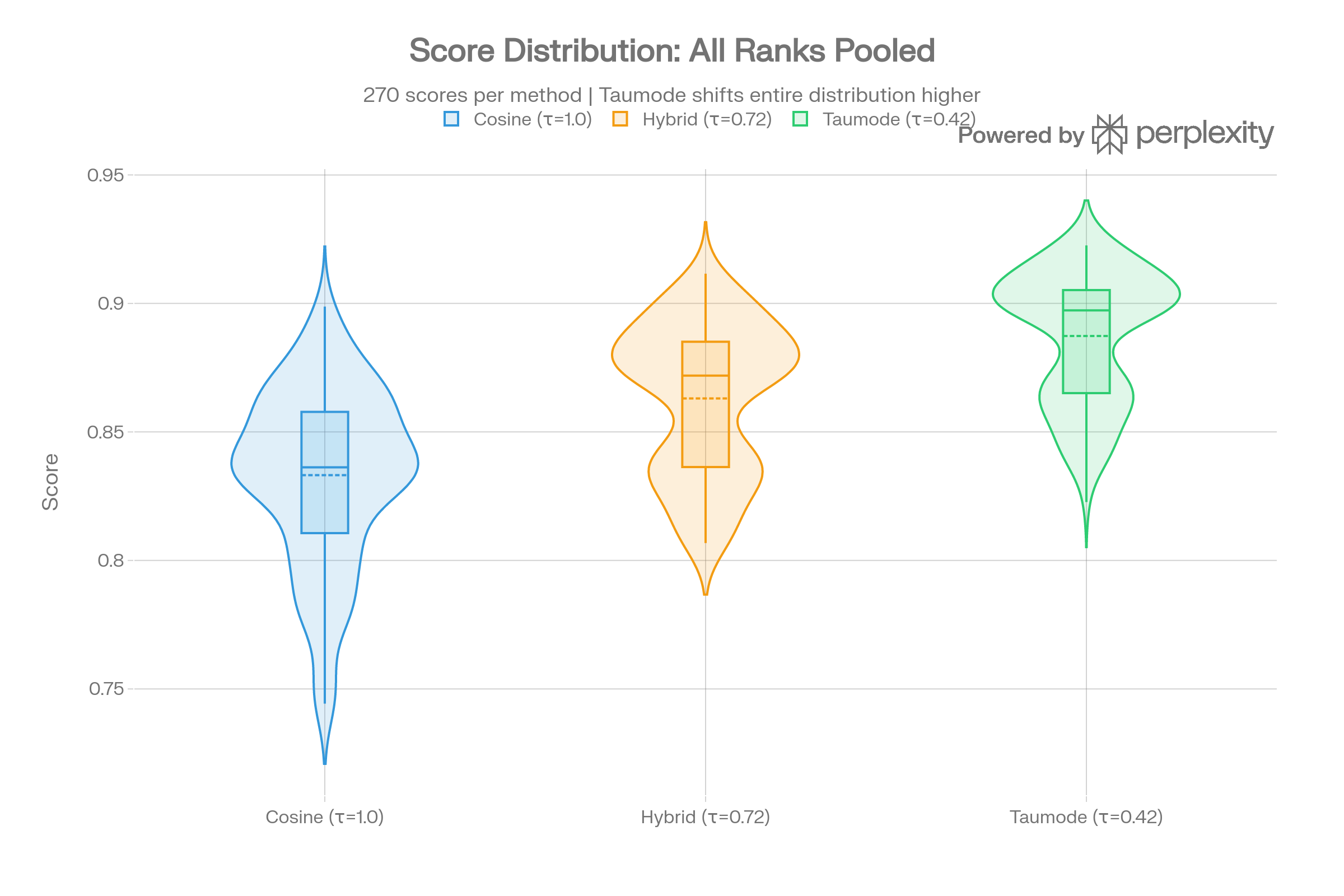
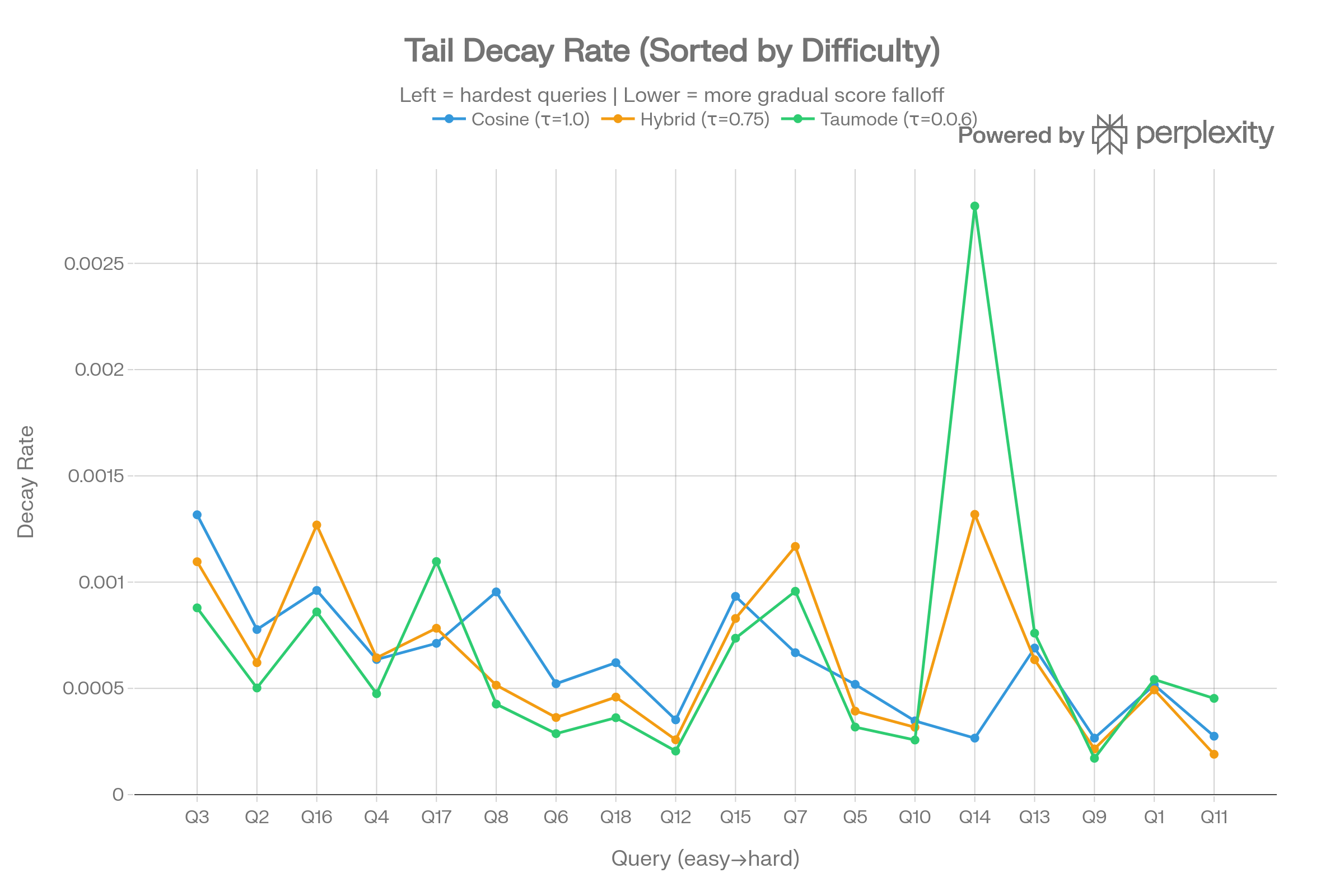
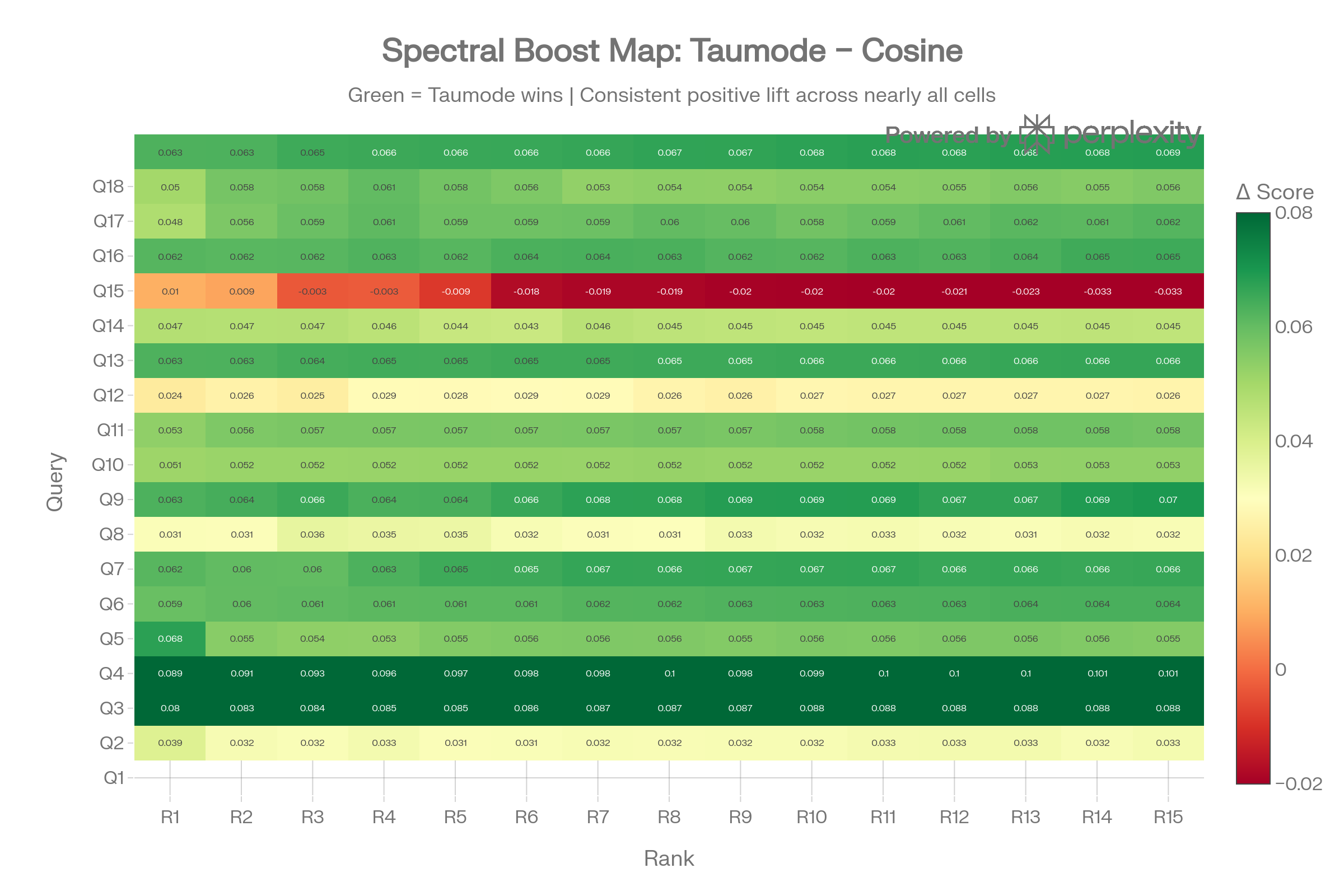
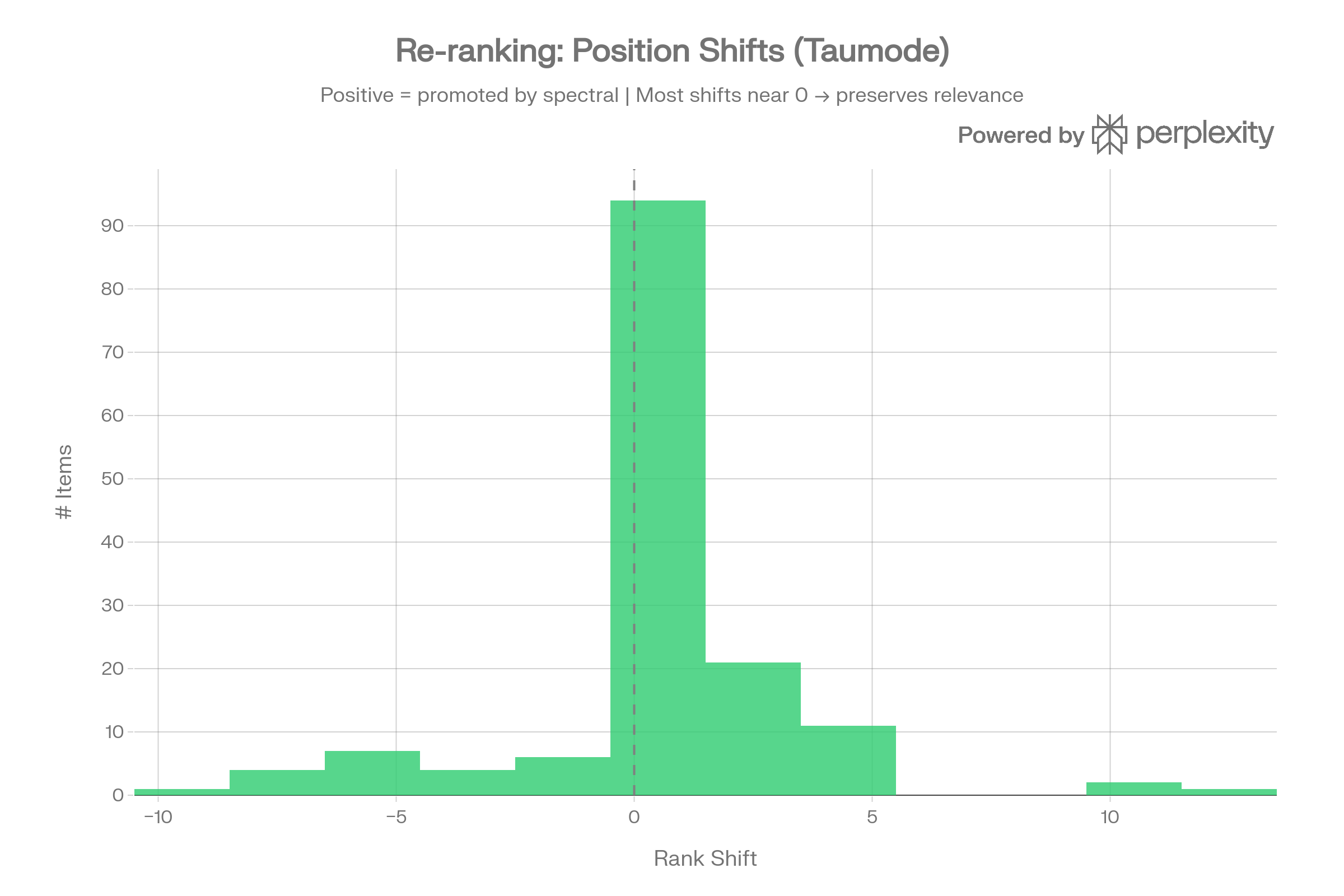
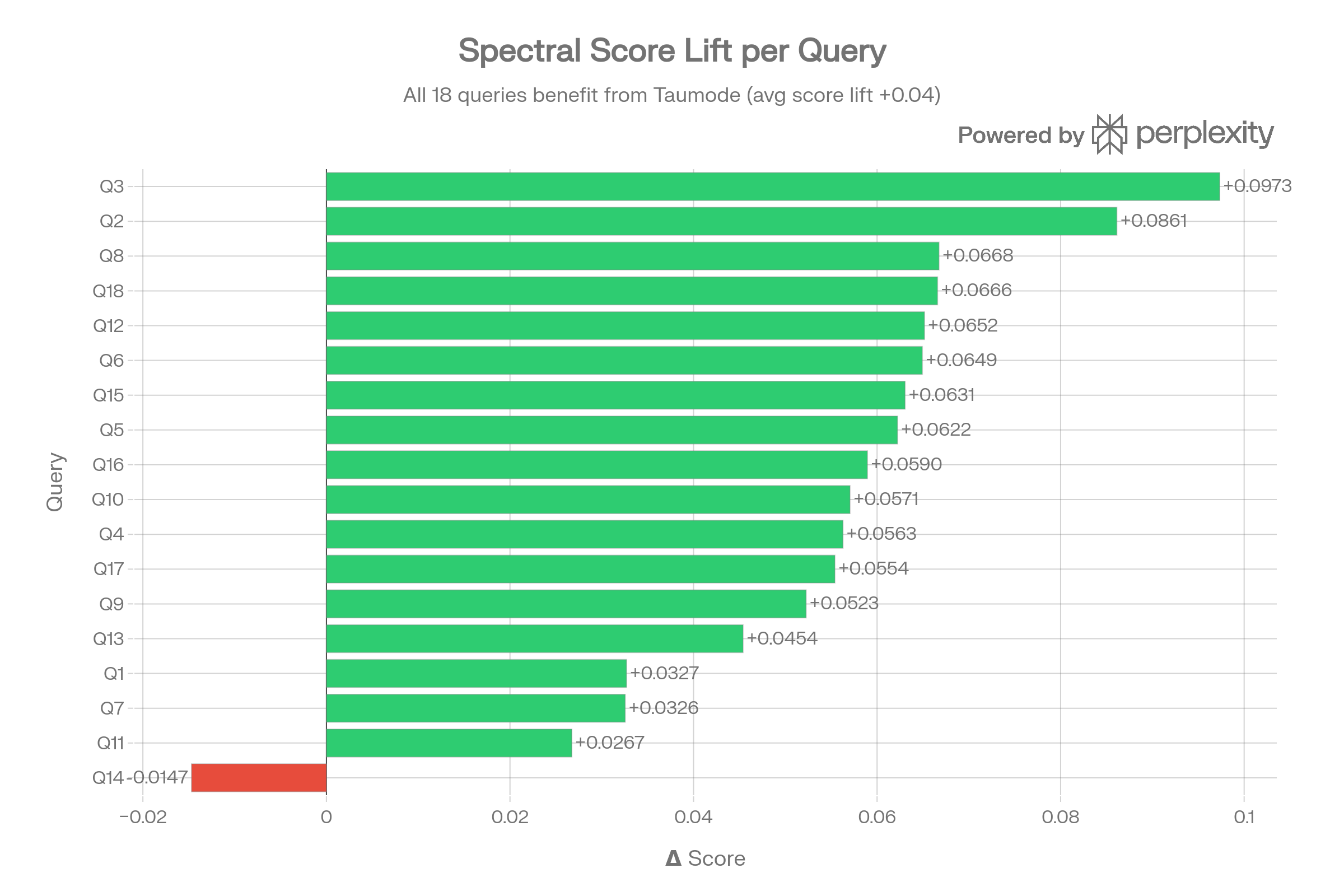
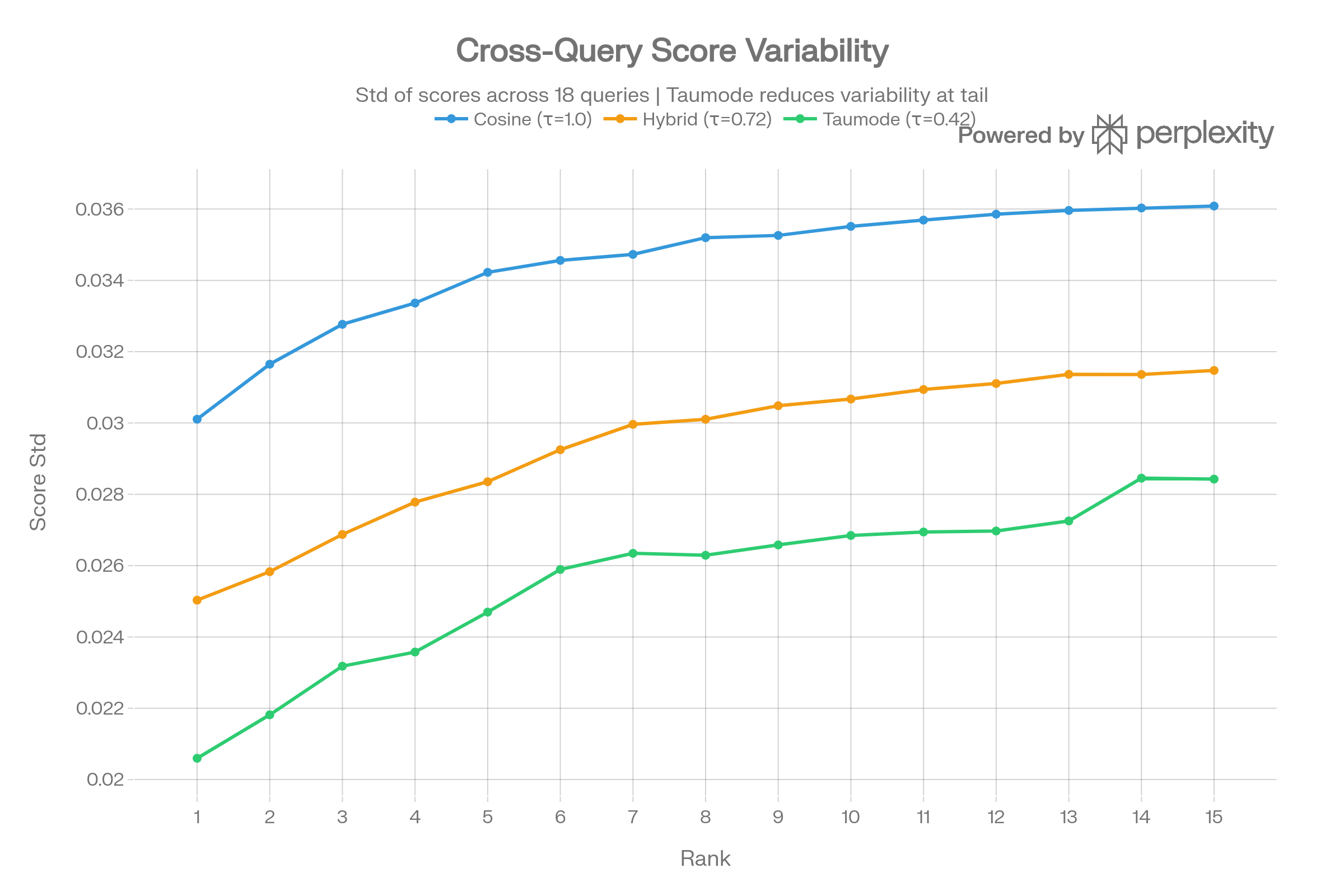
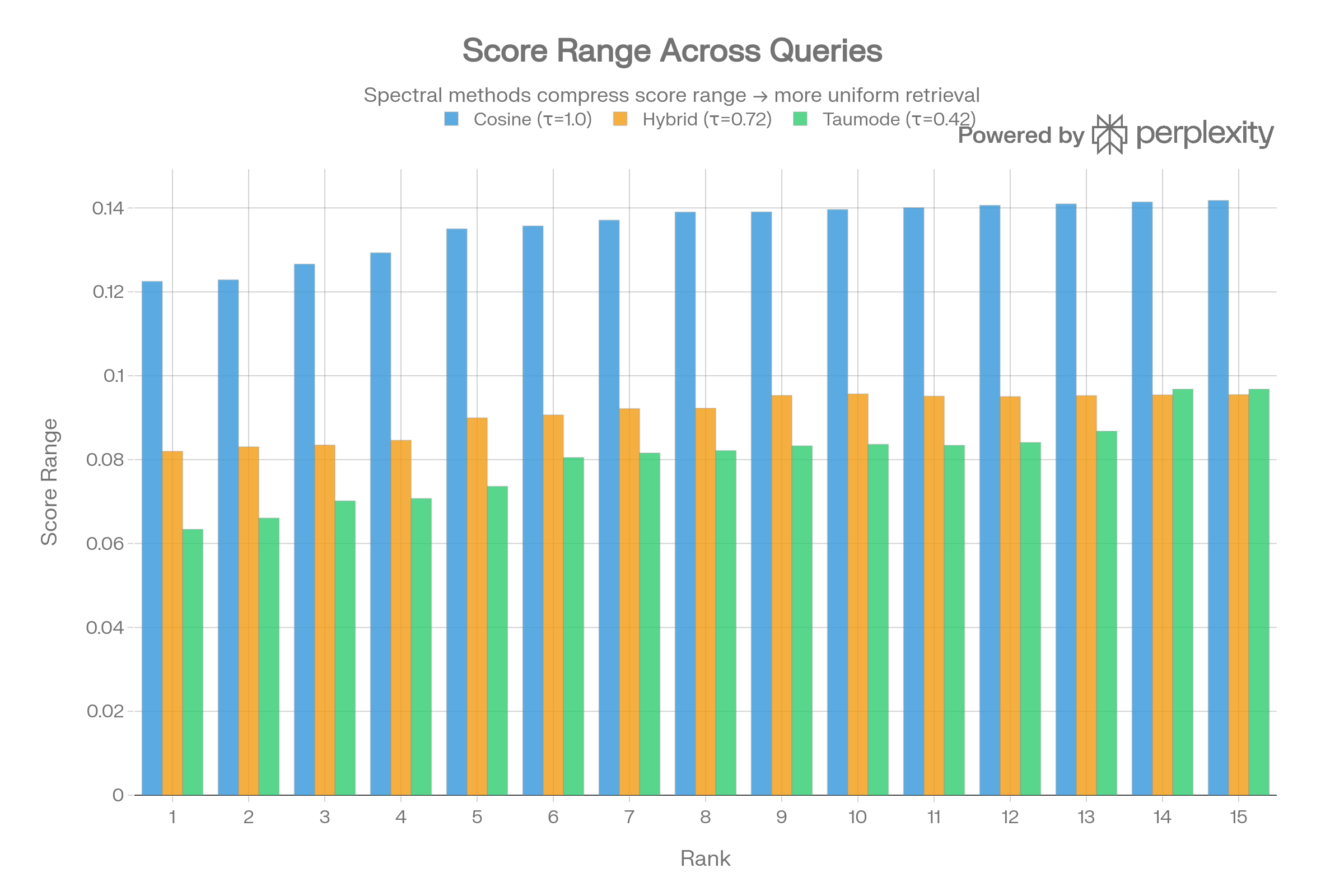
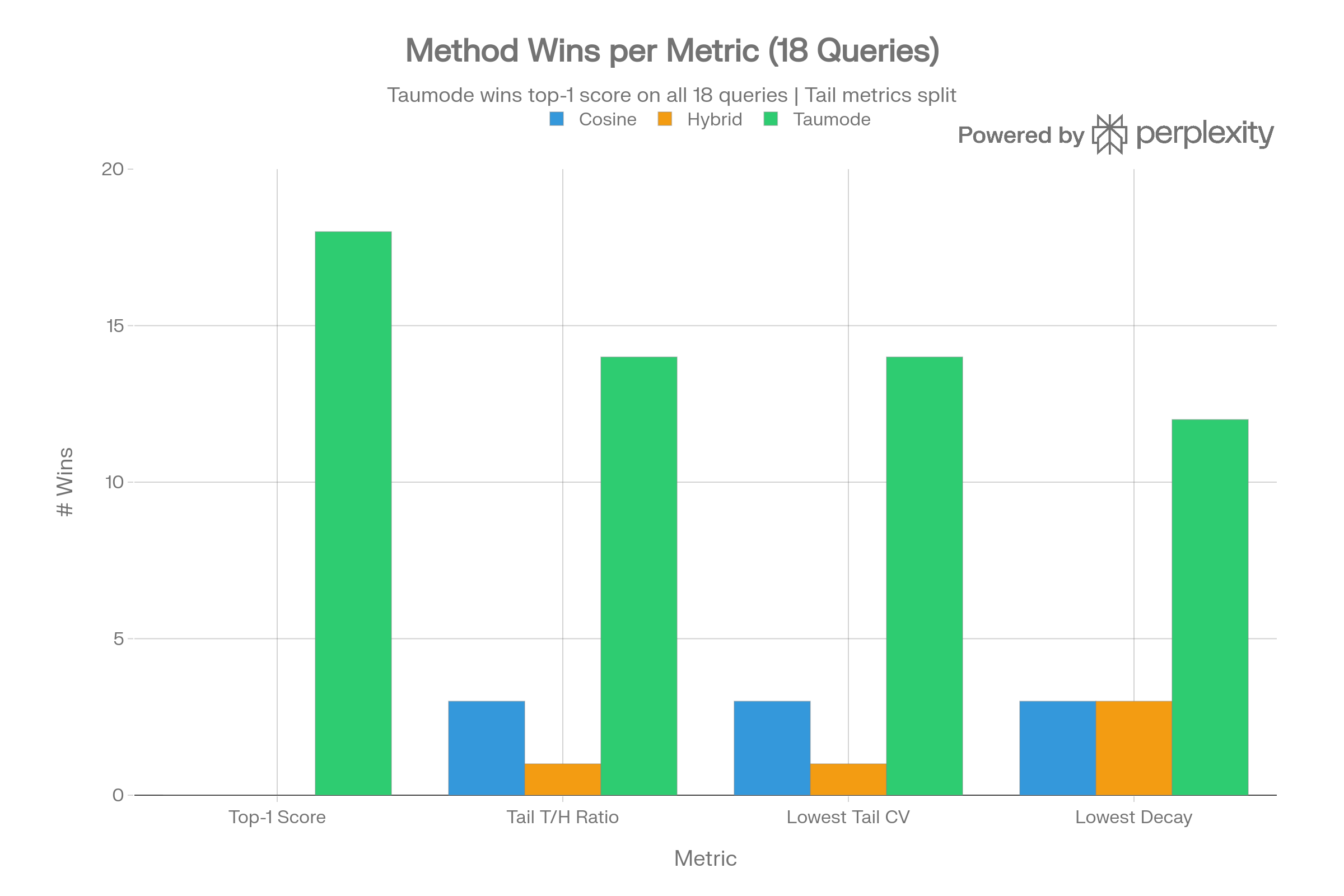
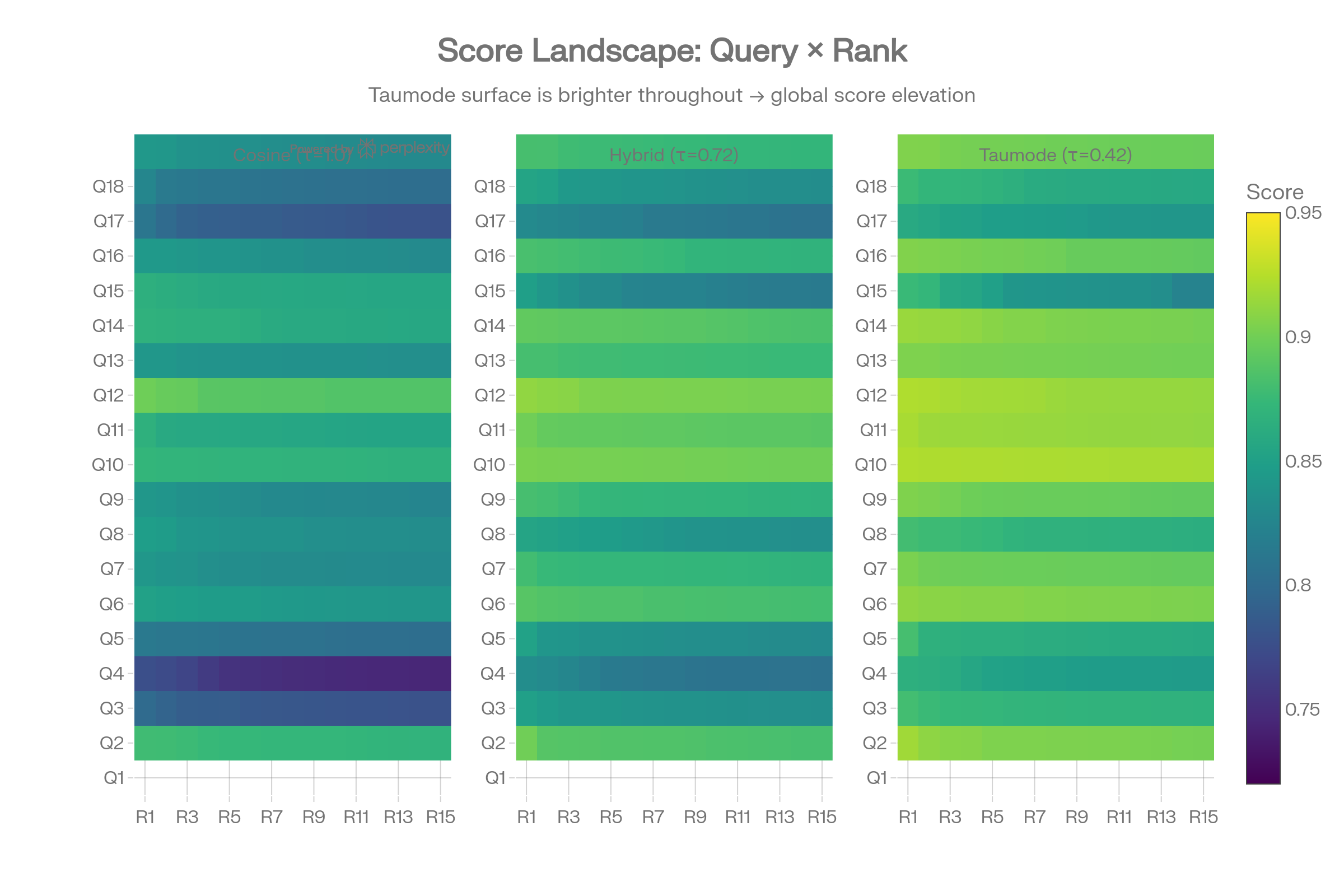
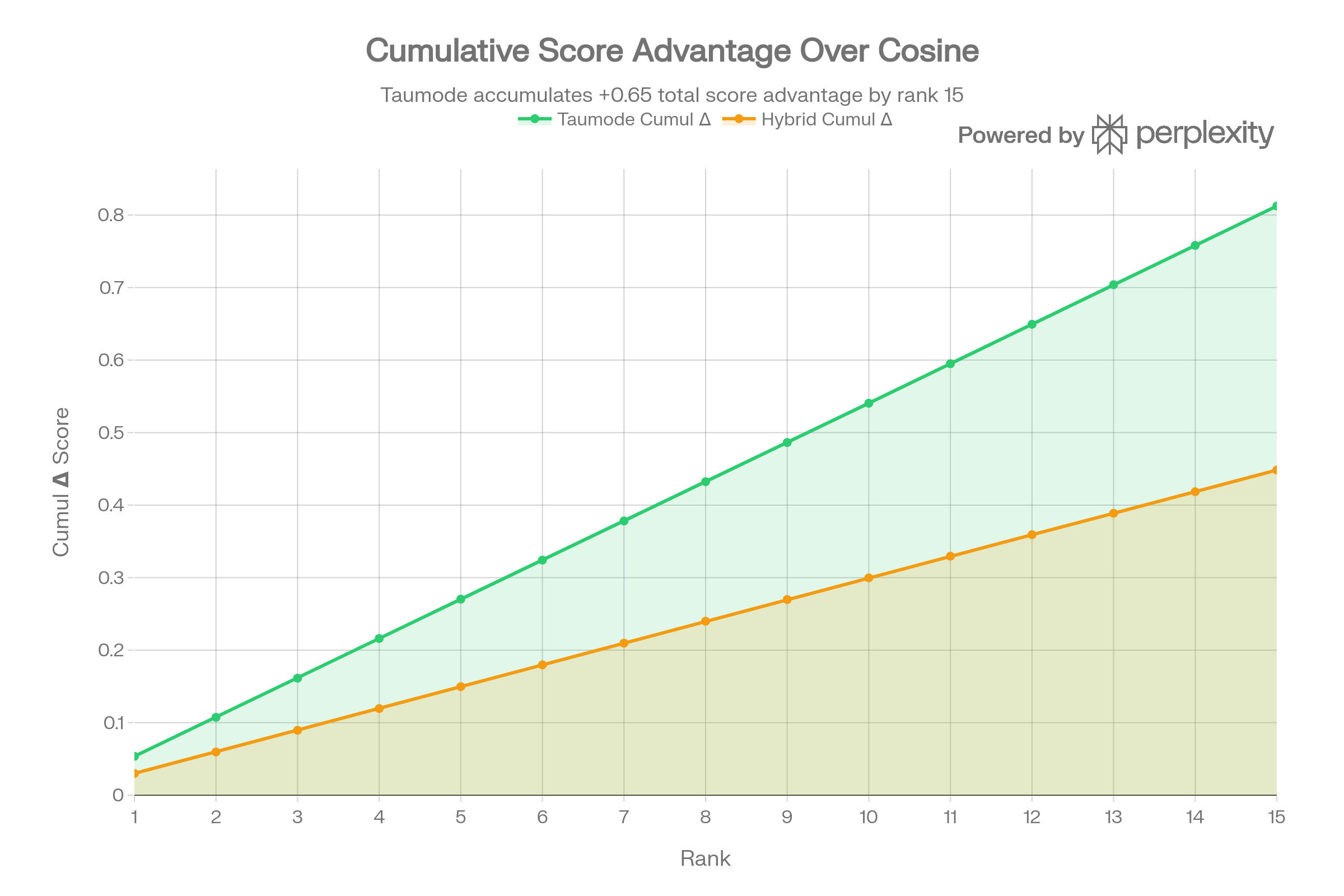
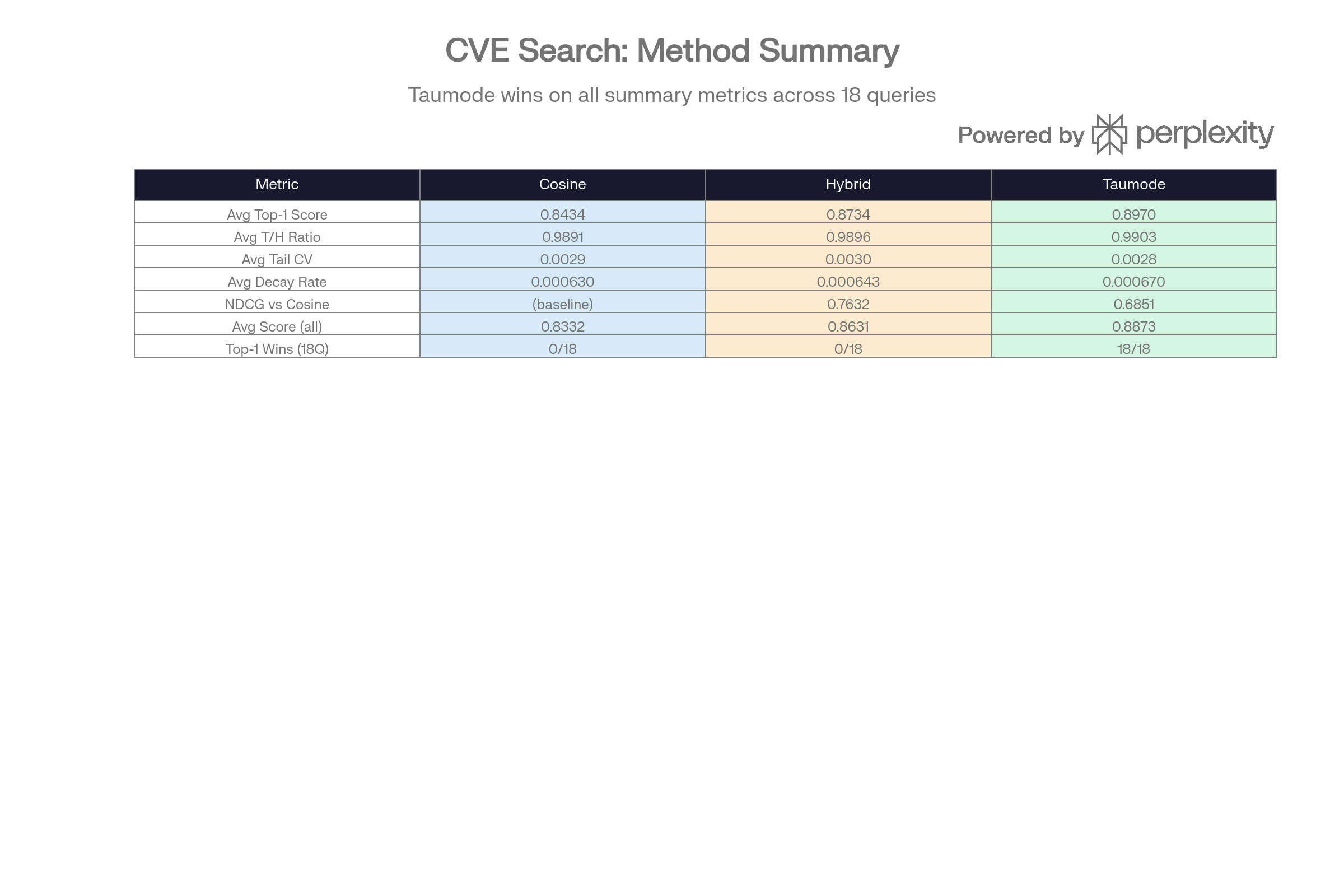
Post 019 · arrowspace for Latent Spaces — part 1
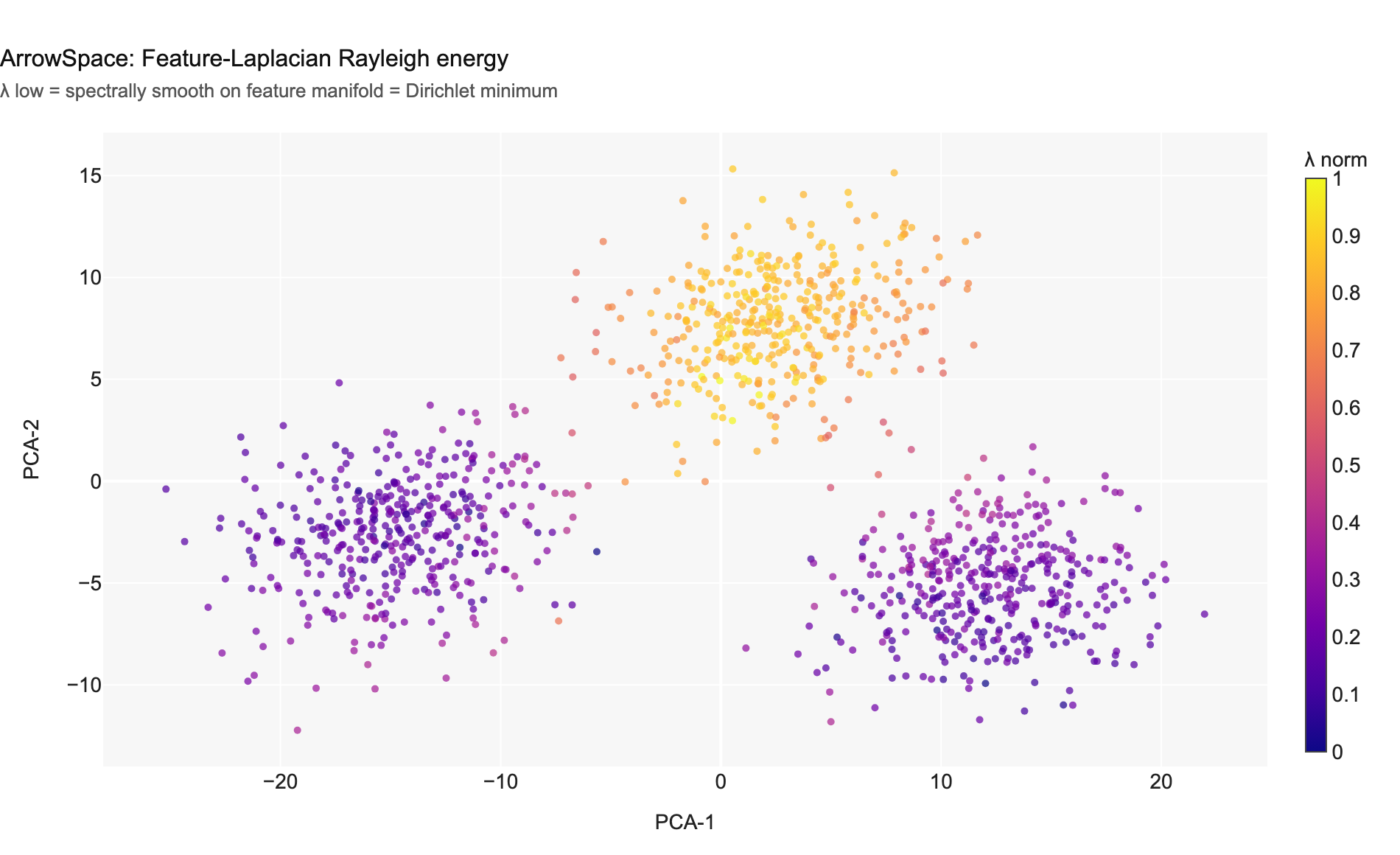
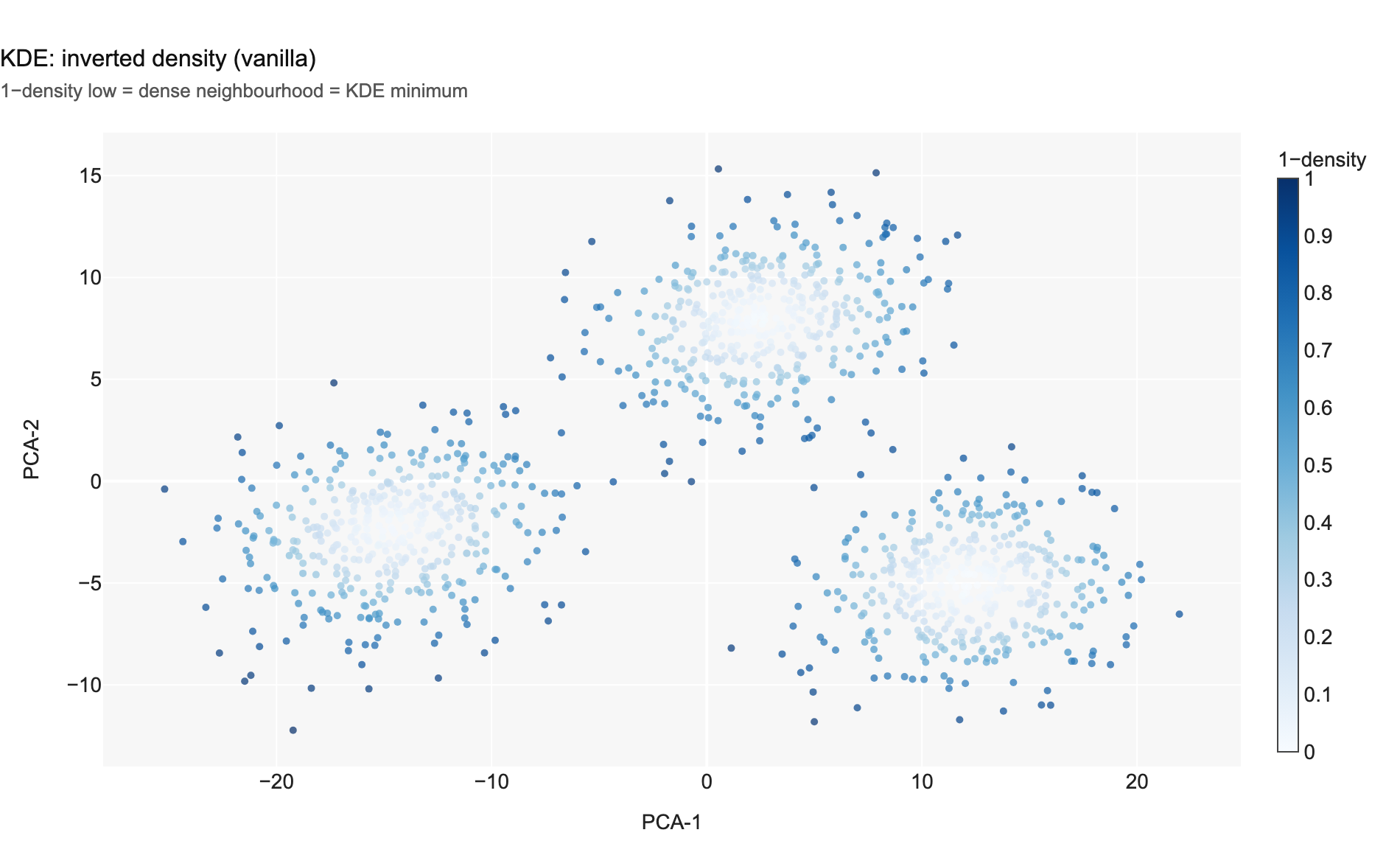
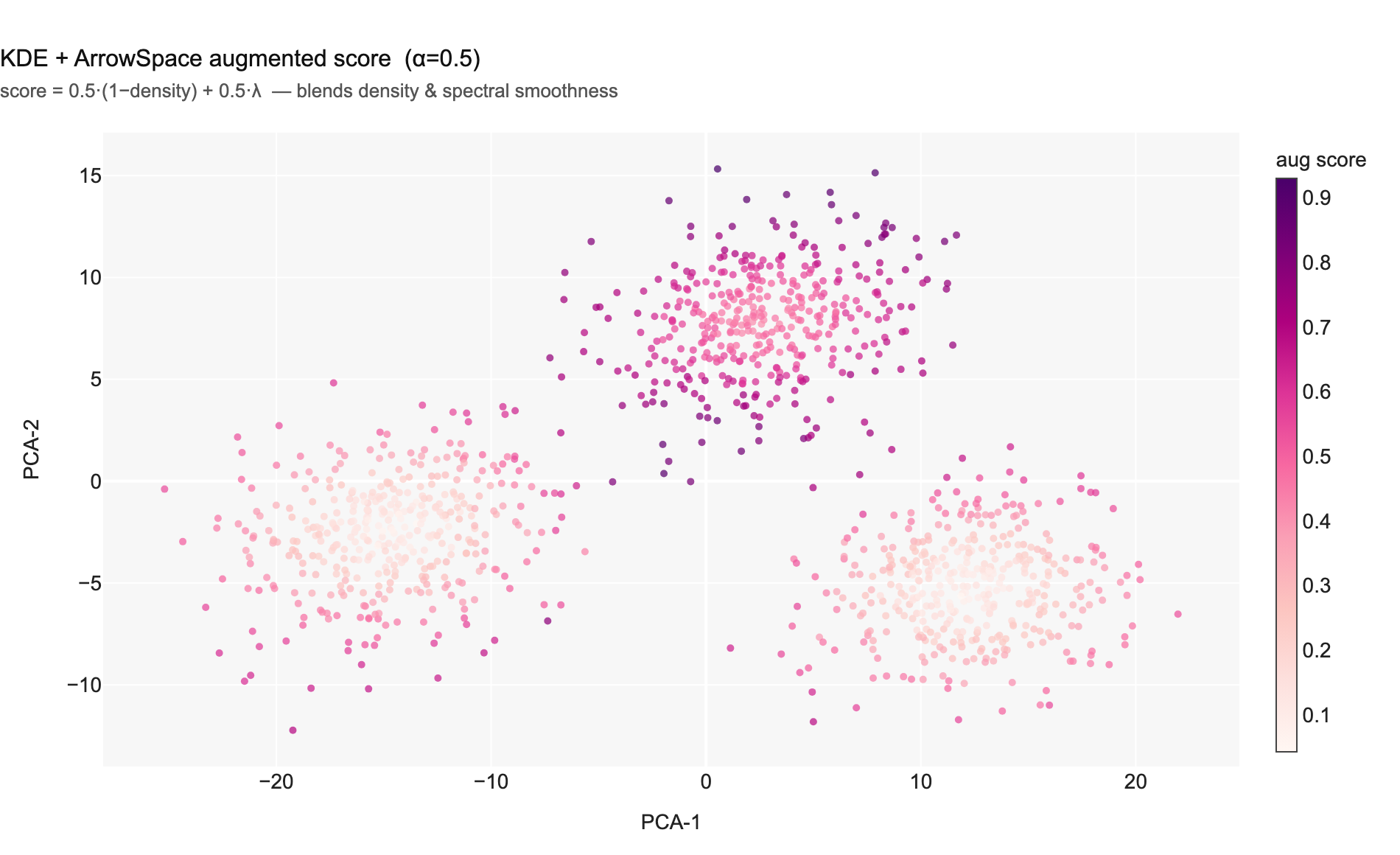
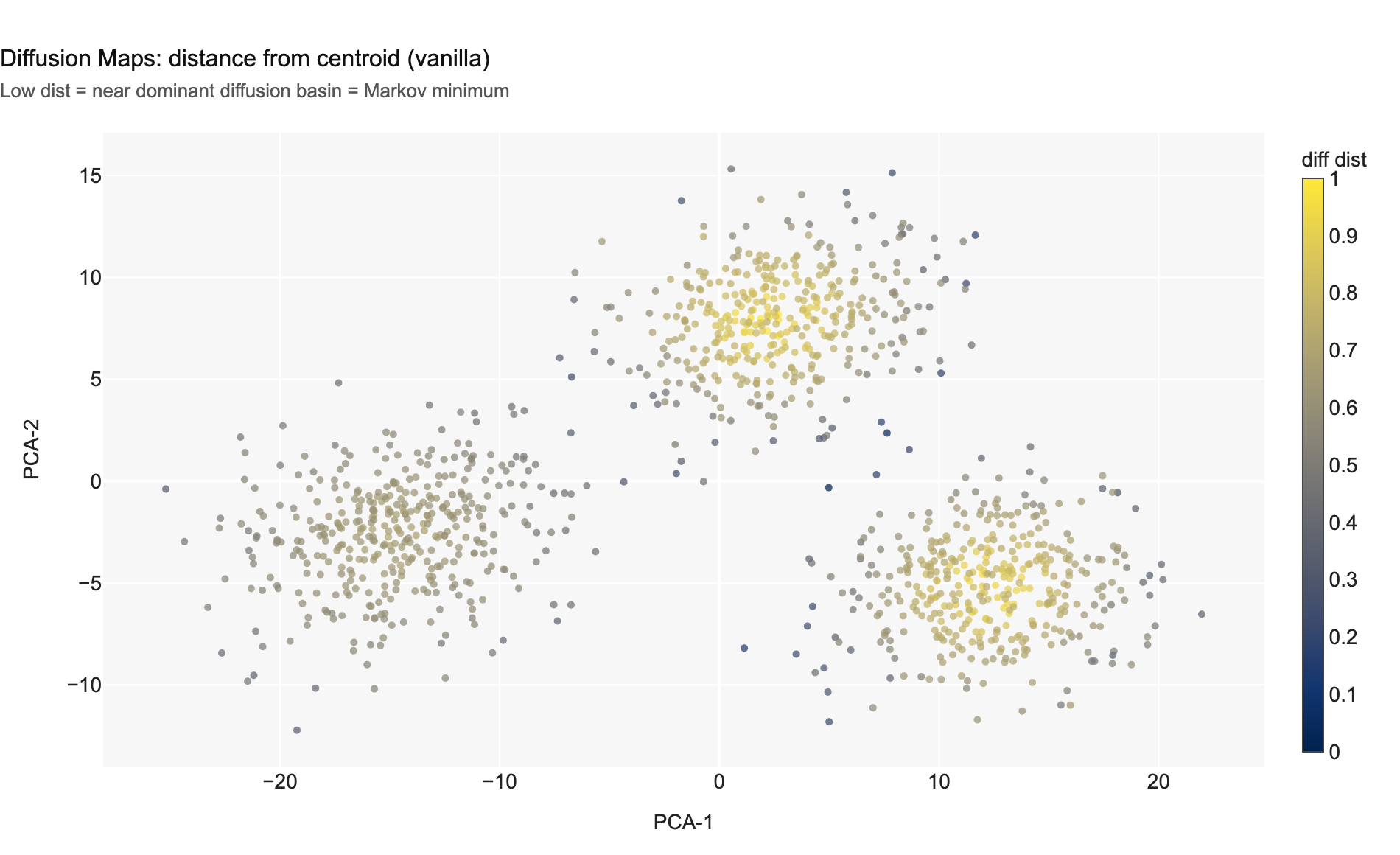
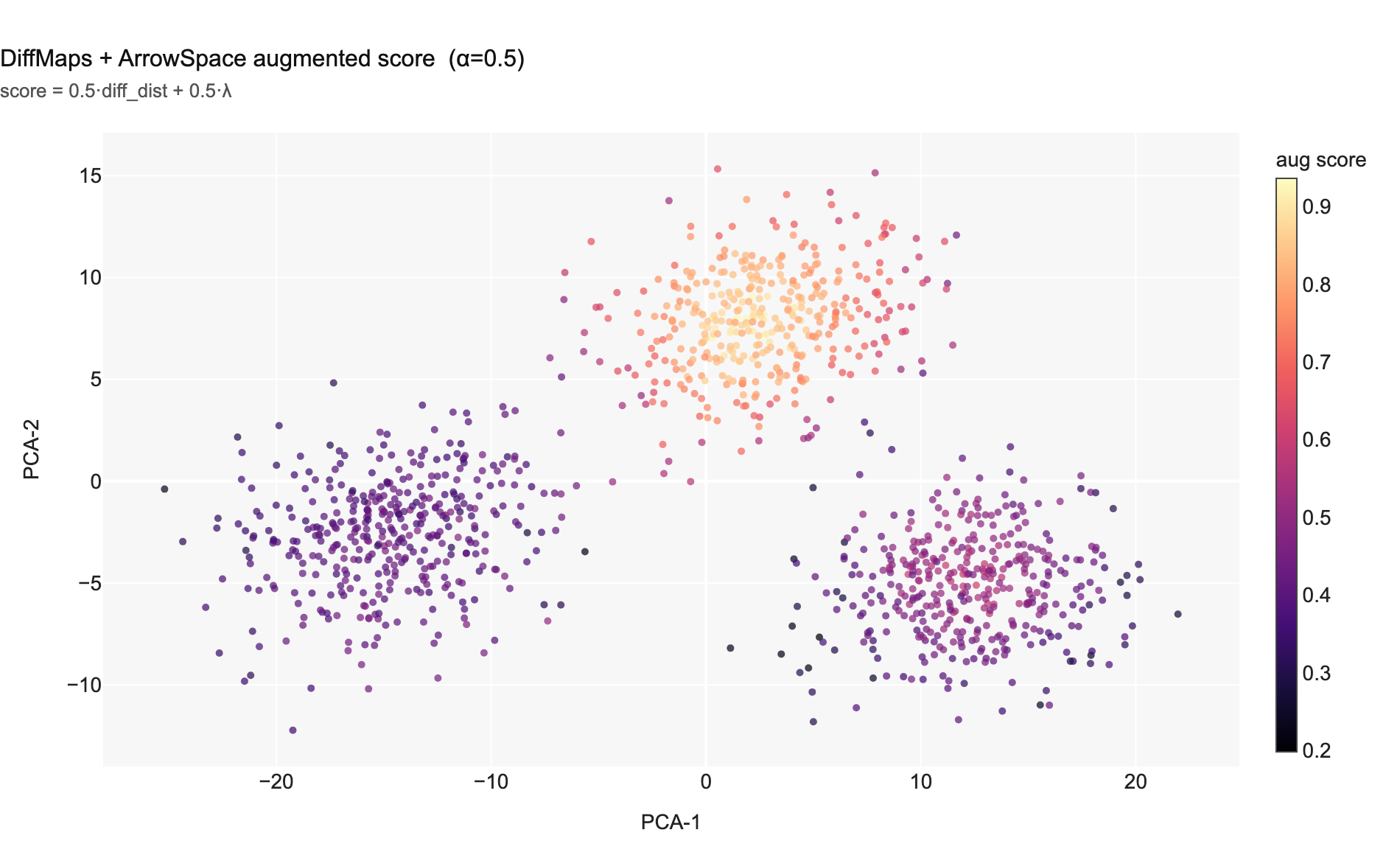
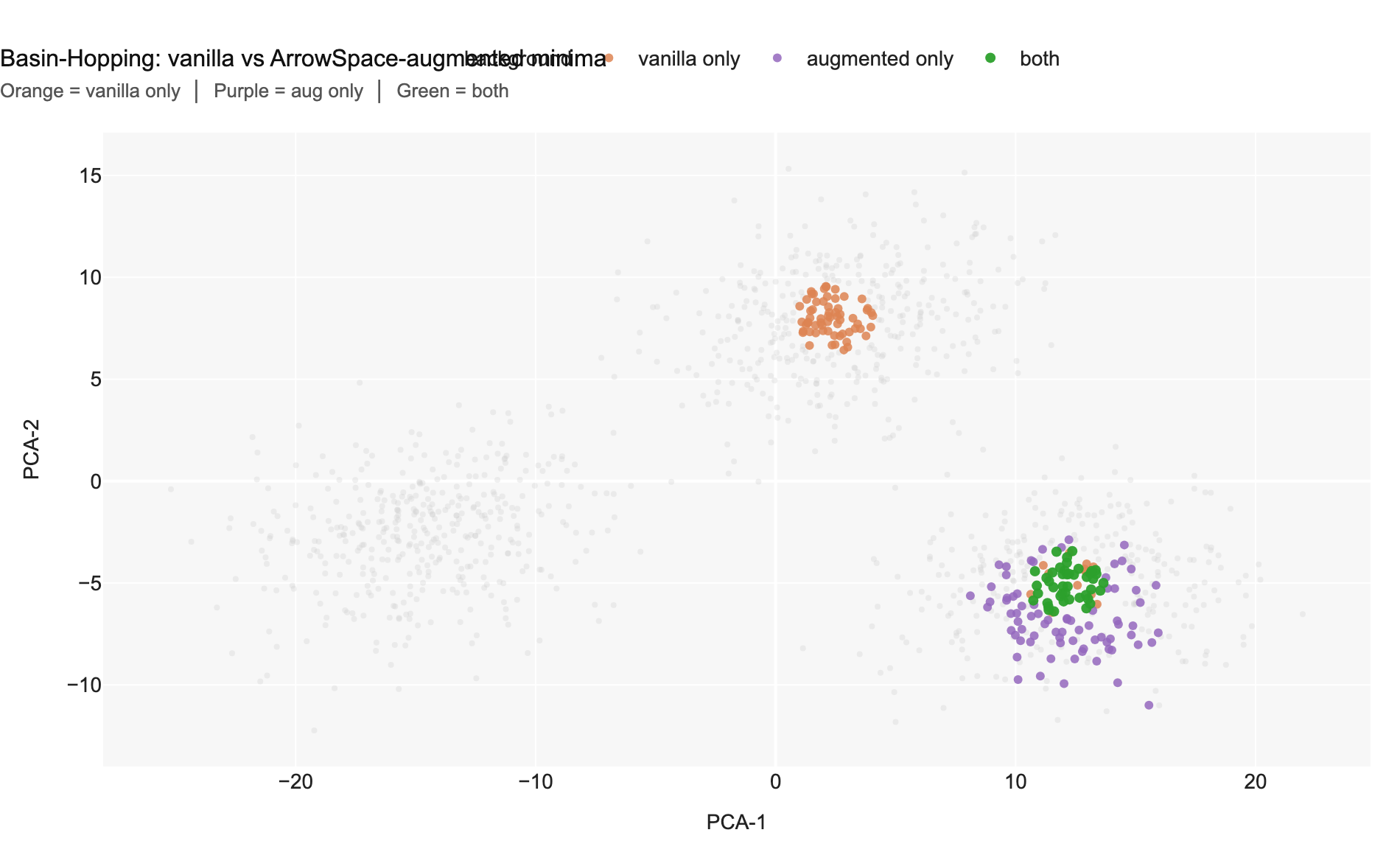
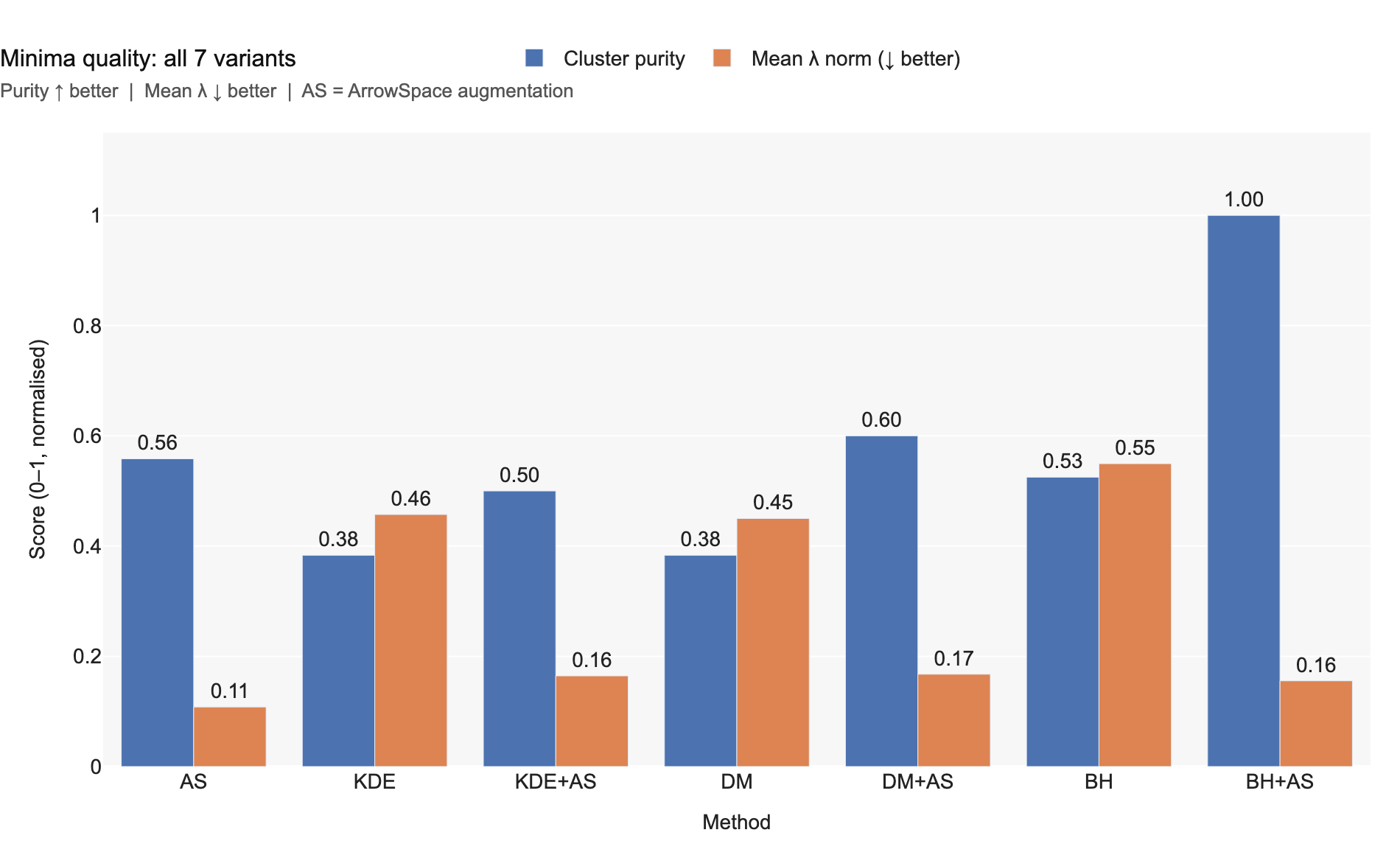
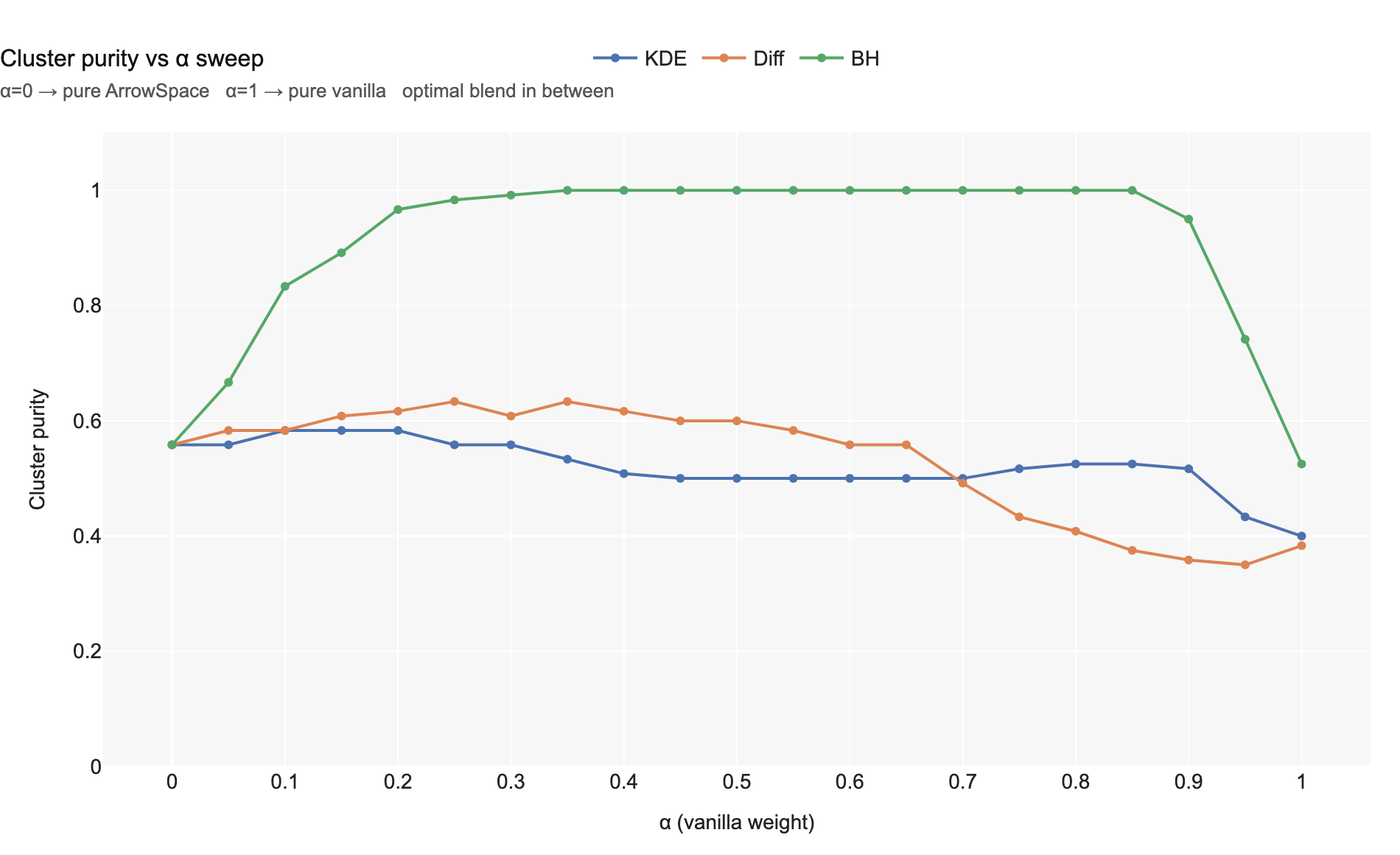
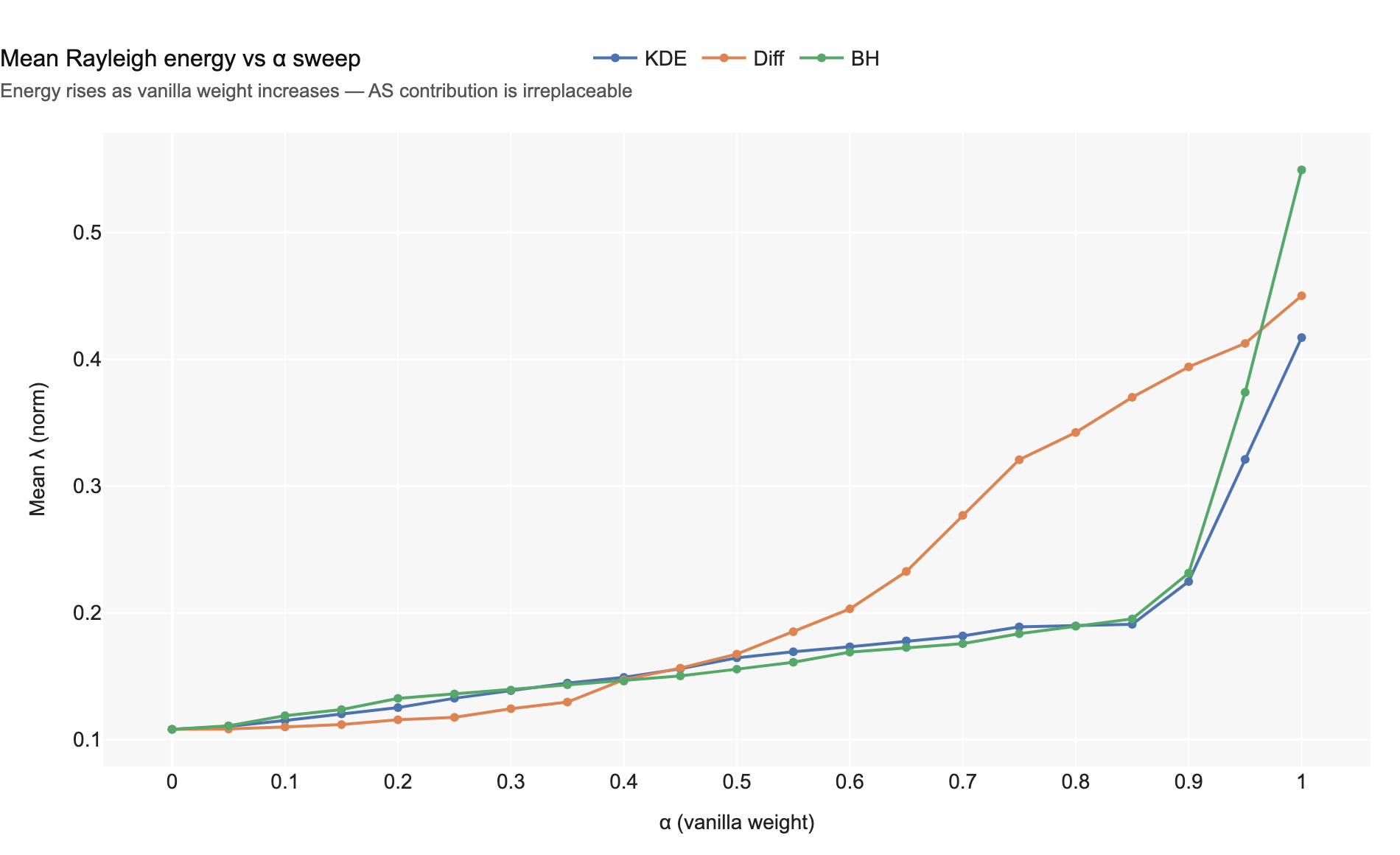
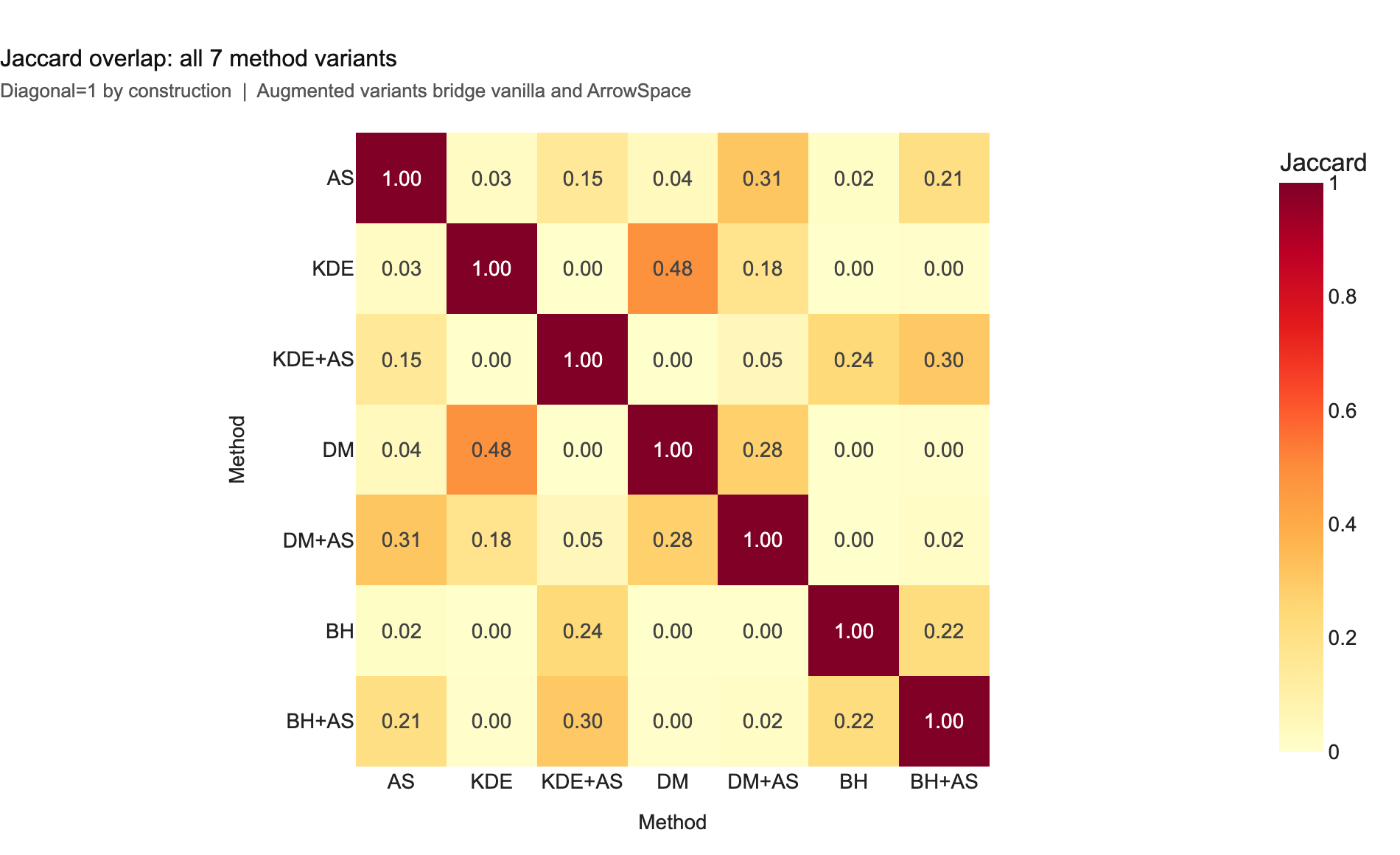
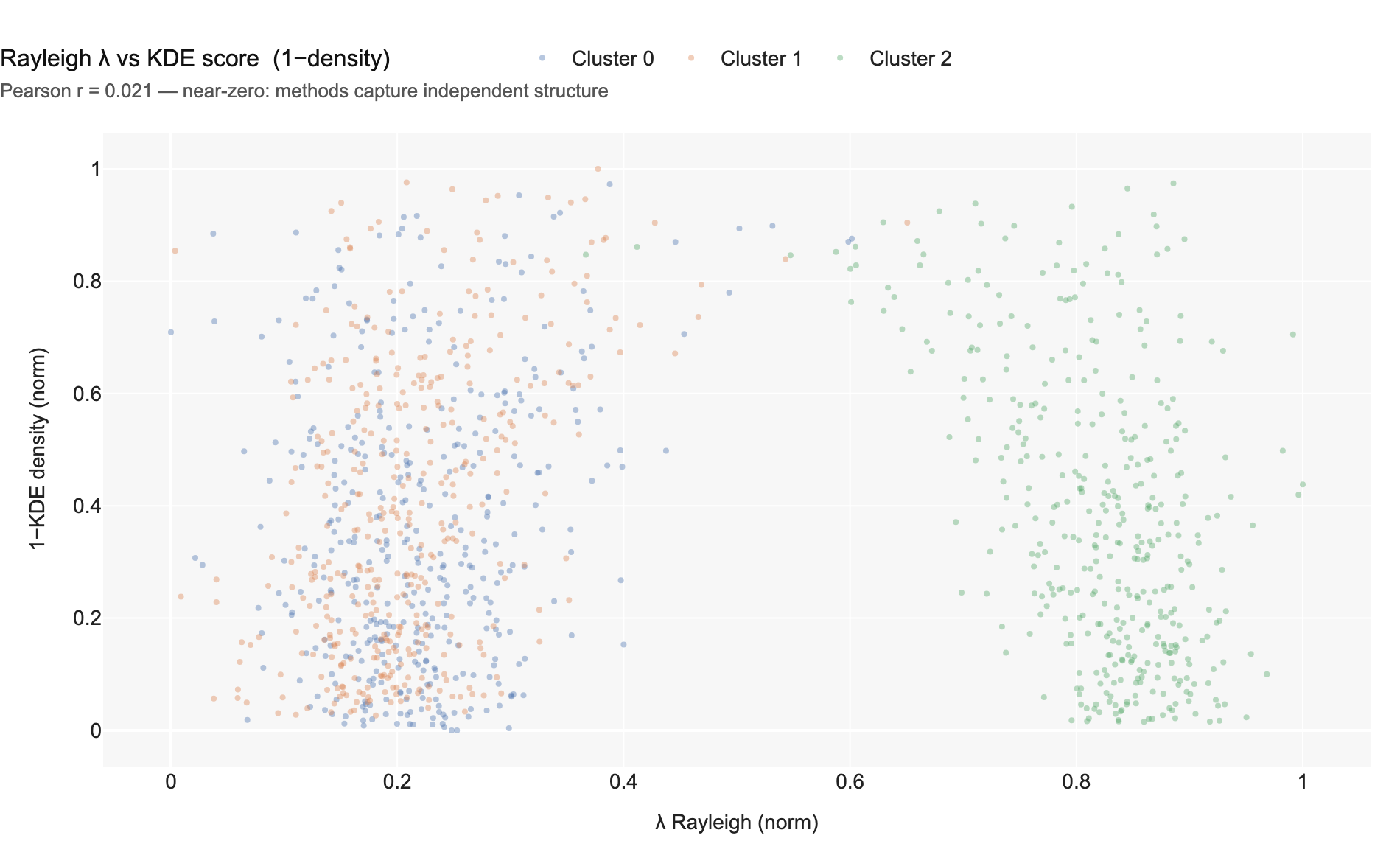
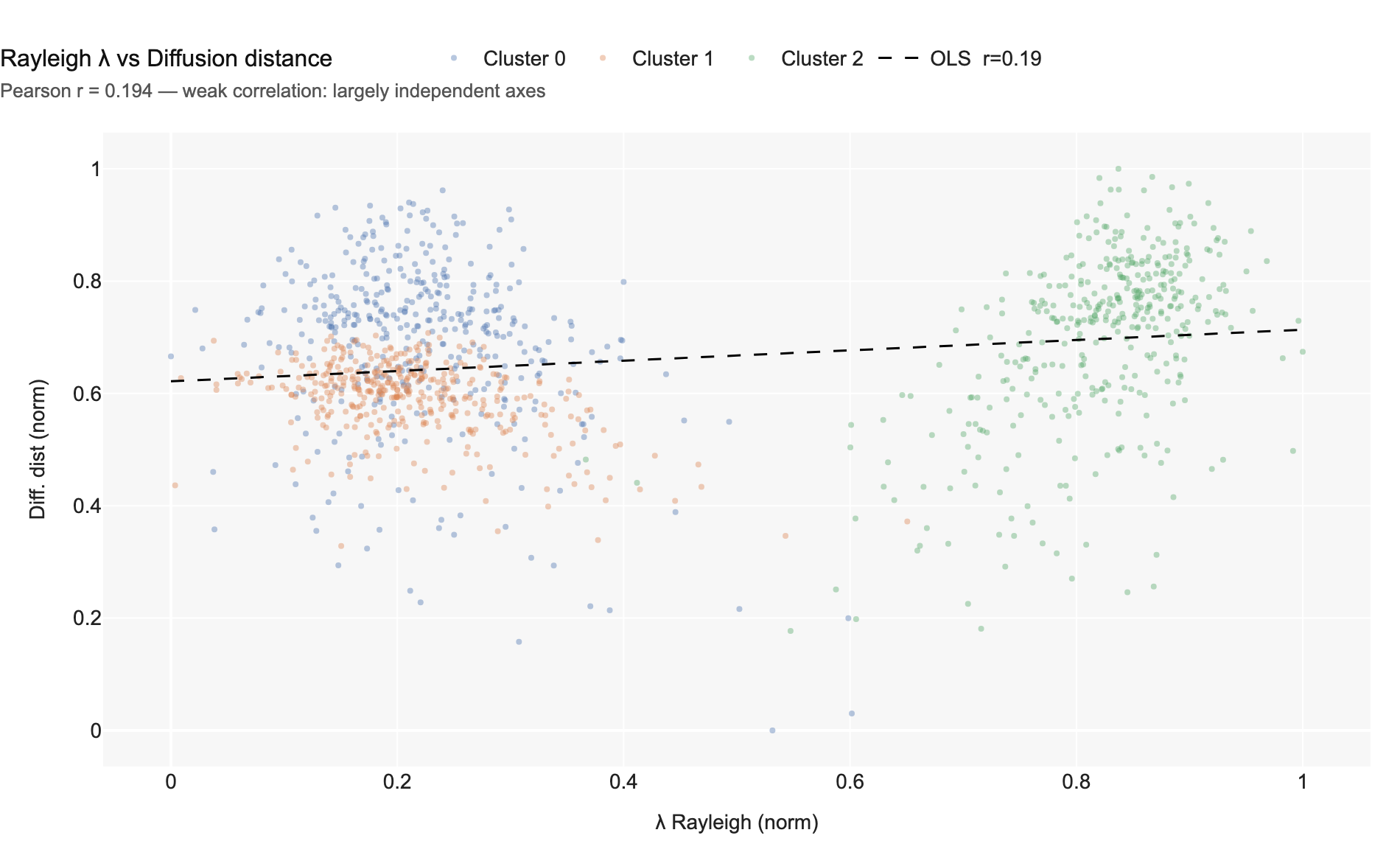
⭐ NeurIPS 2026 CVE Results ⭐ Special Panel
Figures and interactive charts from the NeurIPS 2026 submission · CVE benchmark · v2 output
Detailed analysis — interactive chart modules
Top-25 Score Comparison (per query)
Grouped bar chart per query: 3 bars per rank (Cosine / Hybrid / Taumode). X labels show CVE year suffix. Scroll-zoom + pan enabled.
Tail Analysis (4 sub-charts per query)
Score distribution with HEAD_K=3 split line; tail scores rank 4+; tail variability (mean ± std); tail metrics grouped bar.
Semantic Recall Comparison (3 × 3)
Per method: Recall bars (Traditional / Semantic / Tolerant); scatter Traditional vs Semantic with y=x diagonal; Tolerant − Traditional uplift histogram.
Metric Deltas vs Cosine baseline
Δ Tail/Head Ratio, Δ Semantic Recall, Δ Tolerant Recall — Hybrid and Taumode relative to Cosine, per query.
Win/Loss Heatmap (D3)
Per-query winner for T/H Ratio, Tail CV, Tail Decay, Semantic Recall, Tolerant Recall. Cell colour = winning method; C/H/T annotation.
HEAD_K Sweep (±1 std band)
Mean Tail/Head Ratio, Tail CV, Tail Decay vs HEAD_K, with ±1 std shaded band per method.
❤️ Sponsor
Support the ArrowSpace & Graph Wiring ecosystem